Kálmán Pajcsics
Level Design / Game Design Portfolio
Shiver Thy TImbers
A top-down stealth action game where the player has to haunt a pirate ship by collecting items and activating different types of traps.
Key Contributions:
I was the Lead Game designer among 6 students
Created multiple prototypes to verify game mechanics before production
Iterated on the design and balanced the mechanics based on feedback from the large playtest
Designed all the levels, including the tutorial segments.
Developed features in Unity C# to help out the programmers

WaxHeart
An atmospheric puzzle-adventure platformer where a wax child with a lantern for a heart journeys through a ruined world full of monsters and mysteries.
Key Contributions:
Refined segments in levels for smoother gameplay
Fixed issues related to guiding the player in levels by changing guidelines, framing, lights, and adjusting level geometry
Created fixed camera segments with Cinemachine
Spoken Tower
A mobile game I worked on during my internship at Say It Labs. It is a top-down action rogue-like designed to help children with speech disorders.
Key Contributions:
Developed new features and systems in Unity C# and optimised old systems for better expandability
Implemented art assets and UI with their functionalities
Designed new rooms and encounters
Balanced game mechanics and adjusted item economy
Created enemy AI with a node-based behavior tree
Developed a JSON-based saving system

Contingency 17
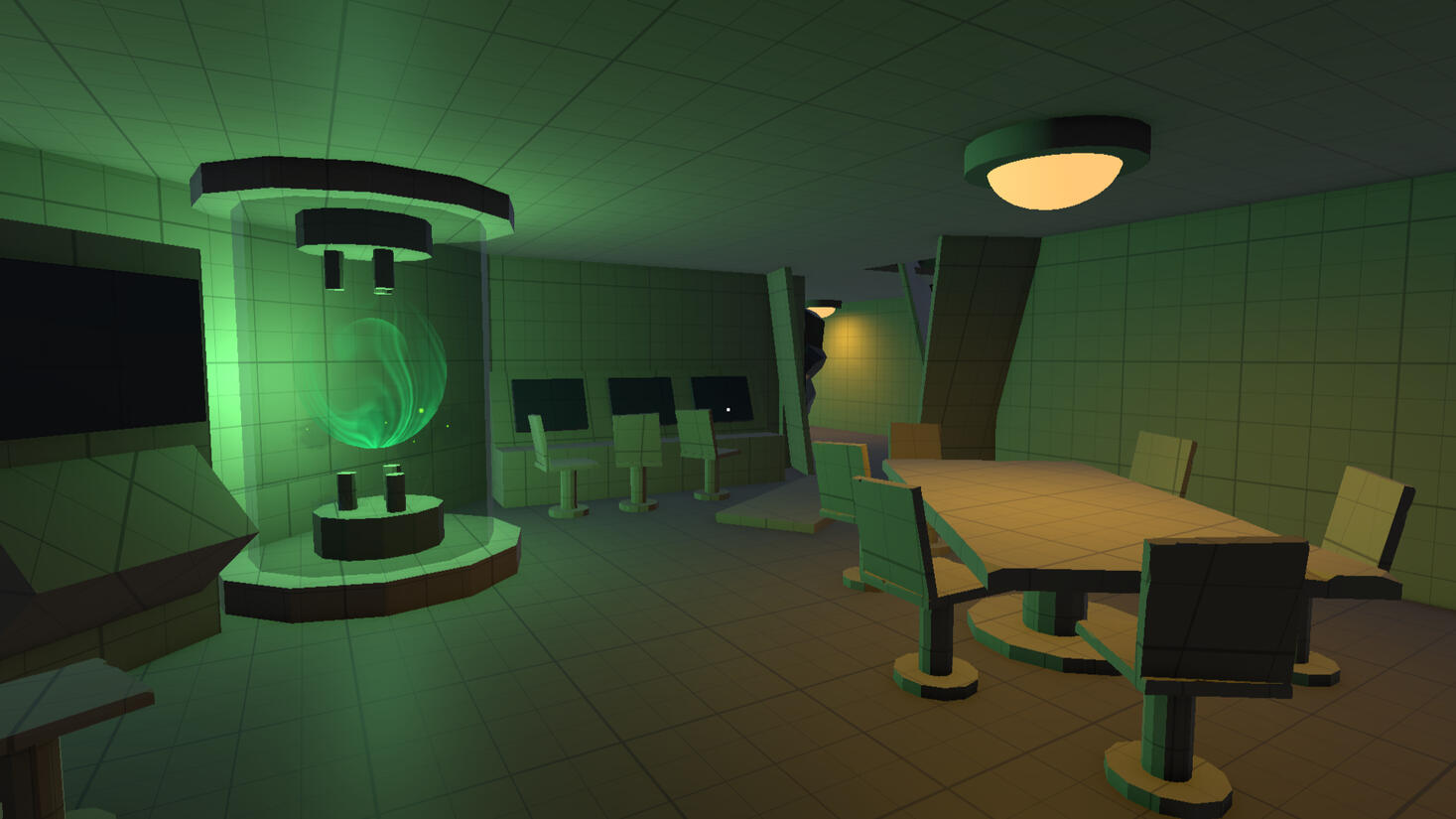
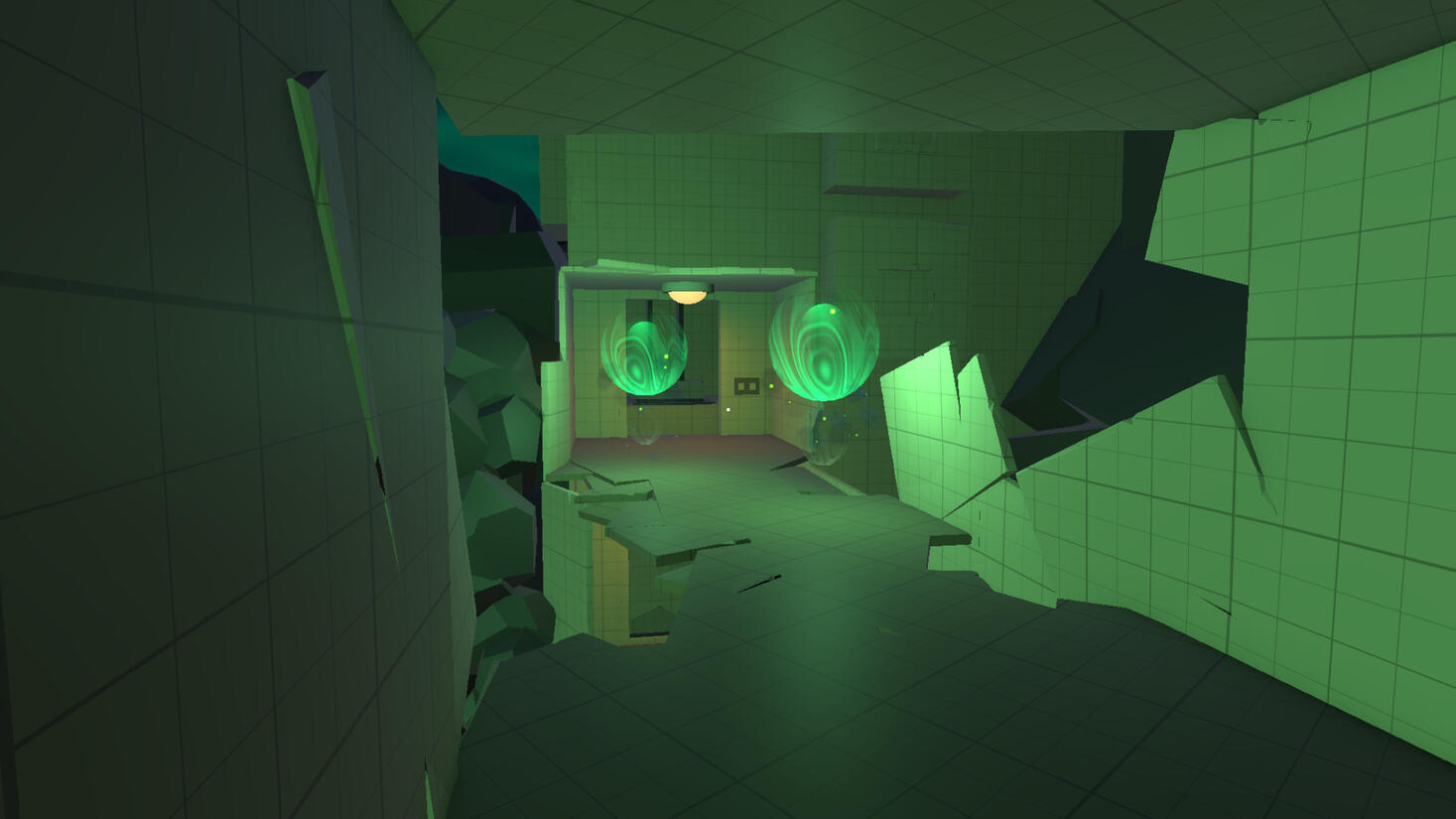
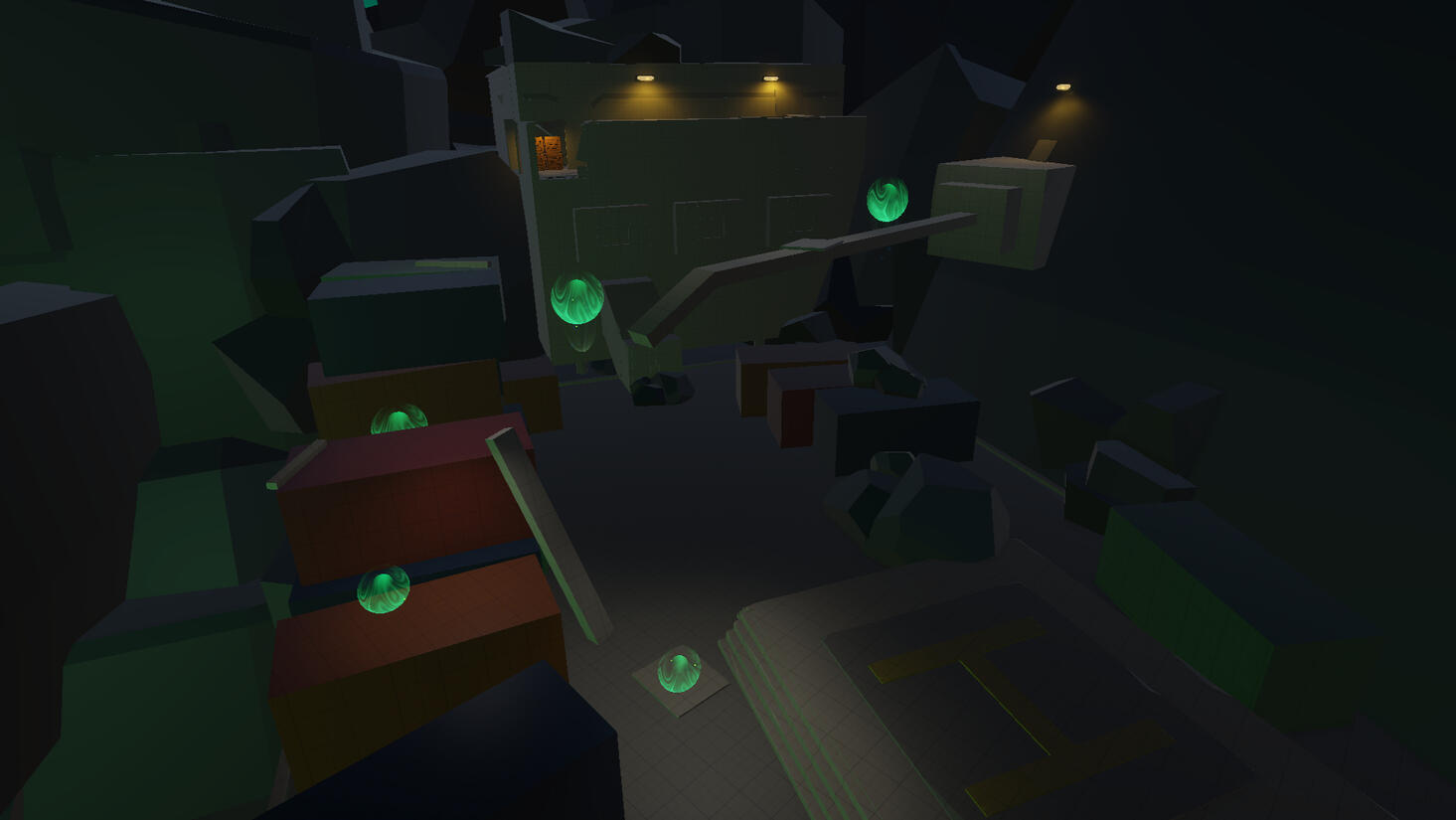
An FPS 3D platformer prototype made during the Into Games Level Design Sprint Course, where the player explores an abandoned research facility.
Other Games
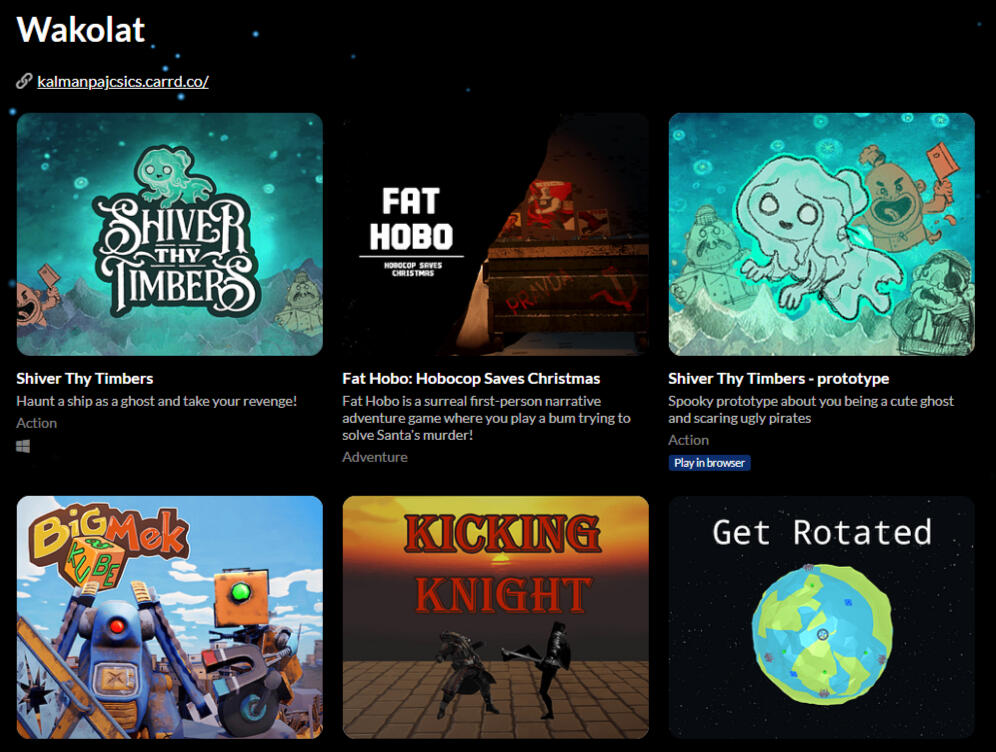
I have worked on many other university assignments, personal projects, and game jam games. They all can be found here:
About Me
I am Kálmán Pajcsics, a Europe-based Level/Game Designer with strong Unity and C# skills. I graduated from Digital Arts and Entertainment in Belgium after completing an internship as a Unity Programmer at Say It Labs.When I am working on a game, the most important part for me is to make the game fun. That is why I chose to pursue a career in game design.Level Design got me interested because I find the feeling amazing when watching a player understand a mechanic I've created or follow a path where I tried to guide them. When creating levels, I am always focused on the ingredients and mechanics and their use.If you are looking for a Level Designer whose focus is on the ingredients and enemies, and player tools being involved in the level design in a fun way, and someone who is also a decent programmer, you might be looking for me.

Technical Skills
Level/Game Design
In most of my projects, I took the role of a game designer or level designer
I have experience in creating blockouts and design plans for gameplay areas and puzzles.
I am familiar with the game elements I can use to guide players’ attention.
I am experienced in prototyping and iterating on game mechanics
I have conducted large playtest sessions.
I am skilled in using Miro Board for planning
I created Game Design Documents for some of my projects
Unity Engine
I have been using the engine for over 4 years now. 1 year as a hobby and 3 years during my studies, including a 4-month-long internship
I am on the upper end of intermediate level with the engine and C#
I designed systems and implemented assets
Worked on 3D and 2D games for Windows and Mobile platforms
Used GitHub and Perforce for version control
3D Modeling
I have basic 3D modeling skills in Maya and Blender.
Contingency 17:
Icarus Gate
This project was made during the Into Games Level Design Sprint hosted by Oliver William Walker. It was a three-week-long series of online lectures where participants were tasked to plan and create a short level in FPS view, inspired by Valve's games.
Design Process
Screenshots
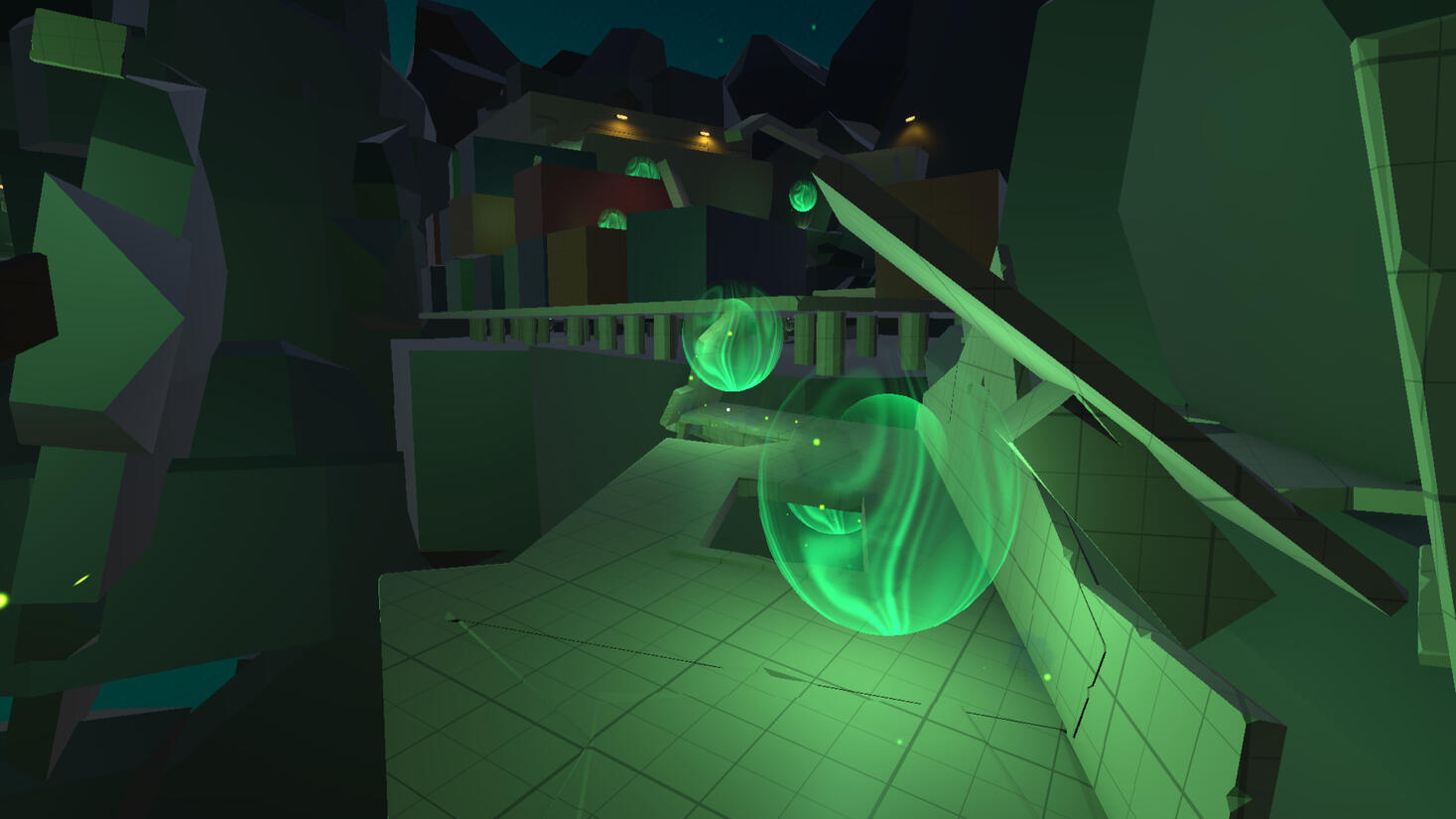
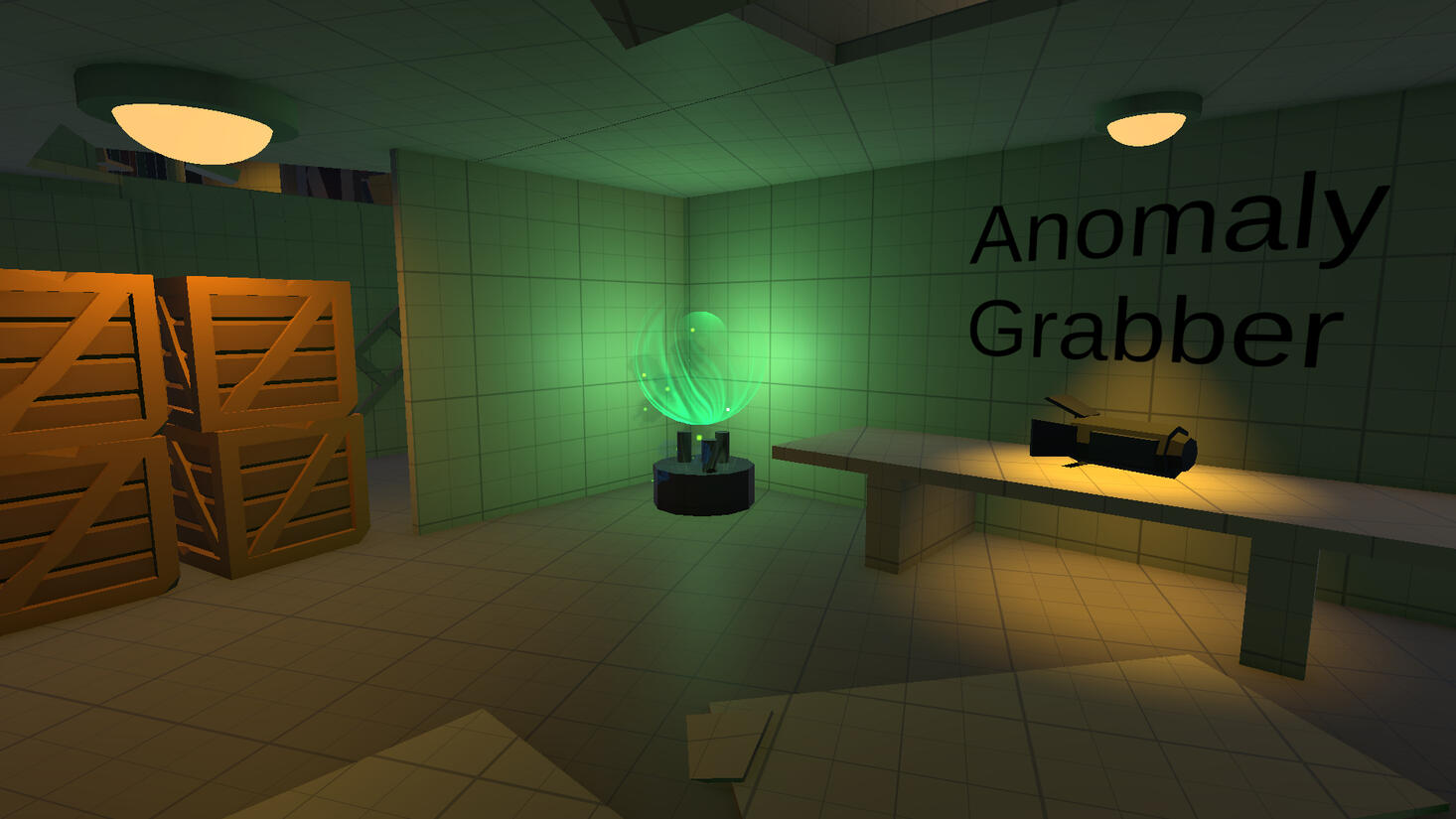
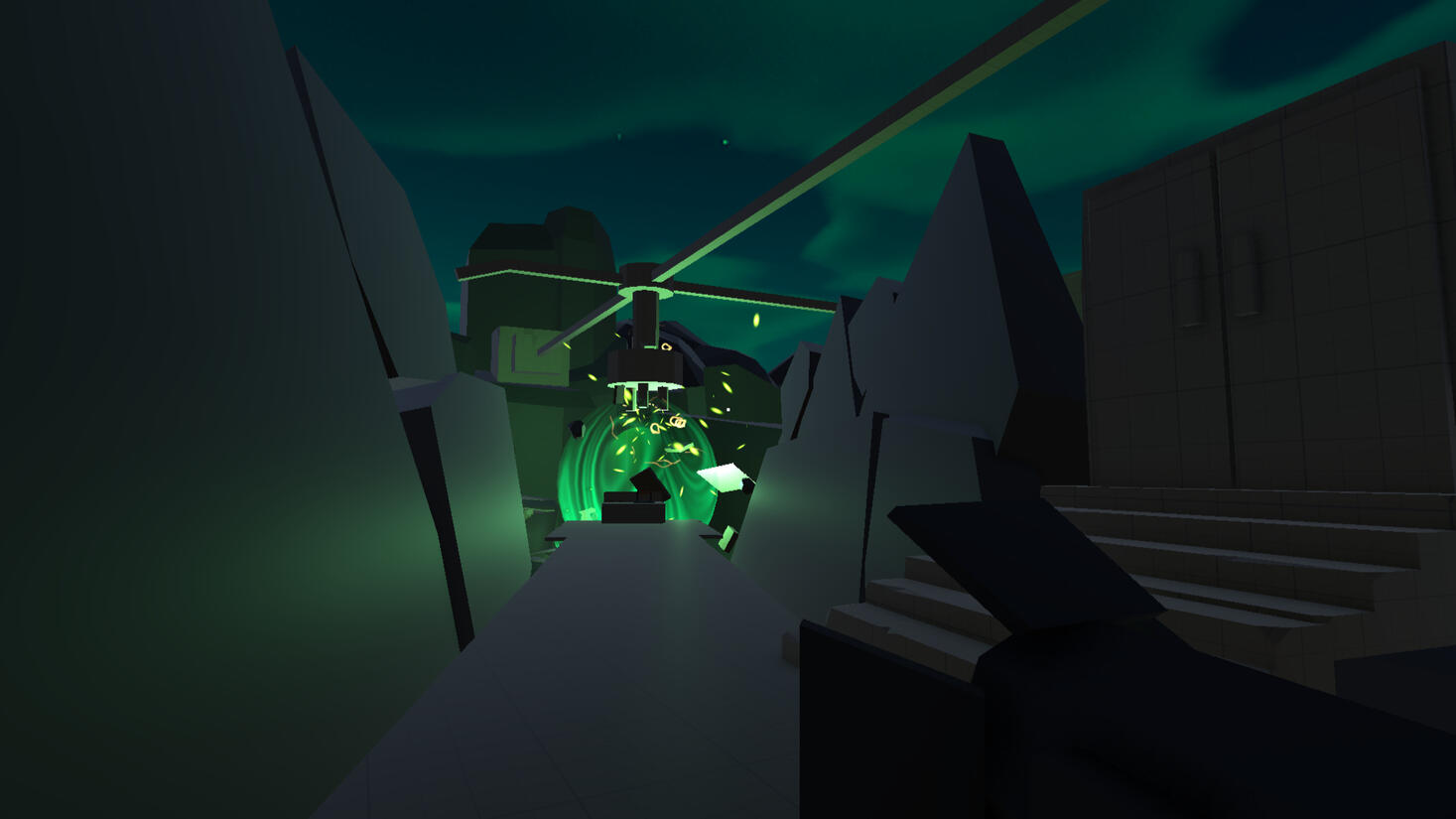
Main Room Reveal
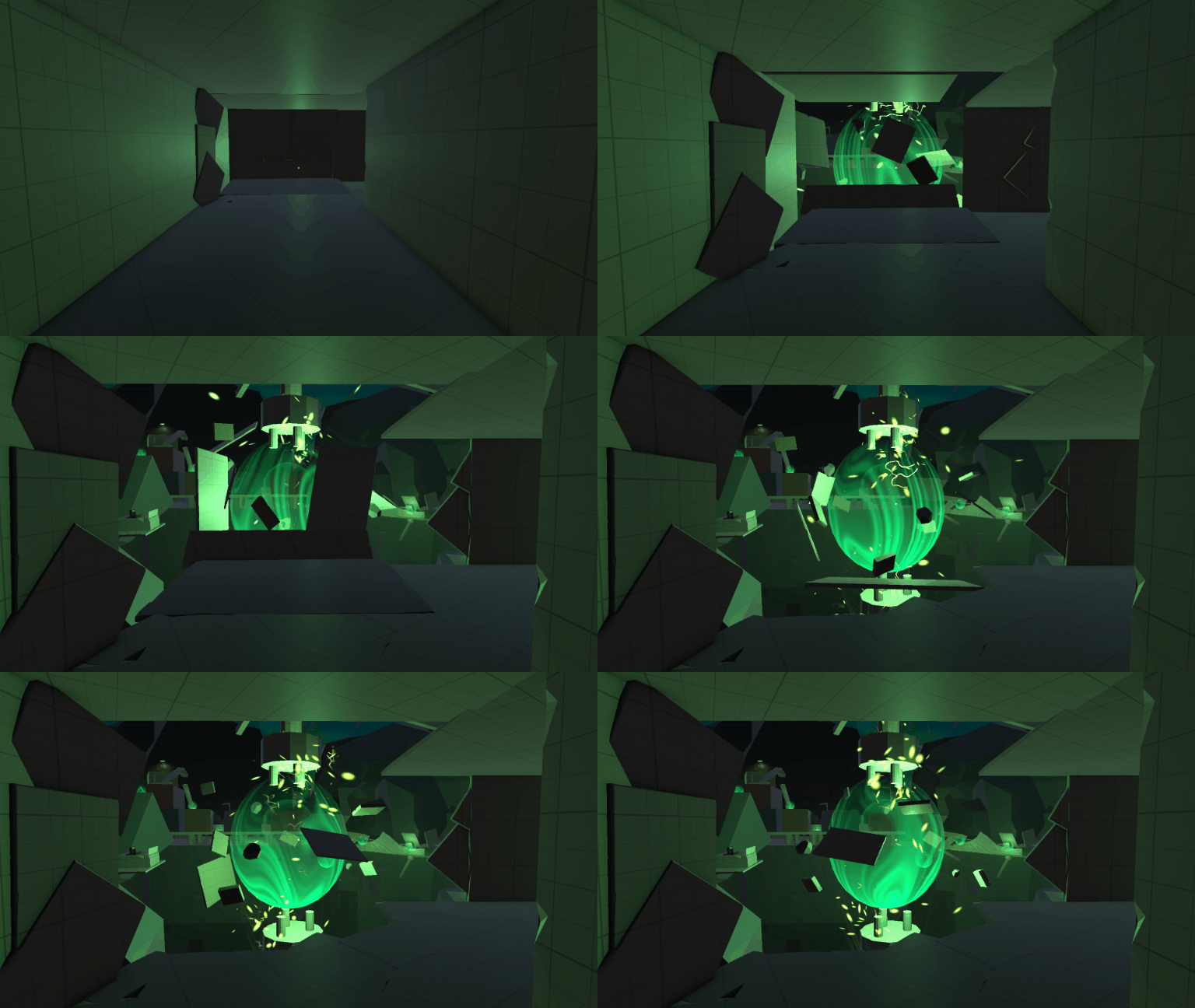
The ingredient
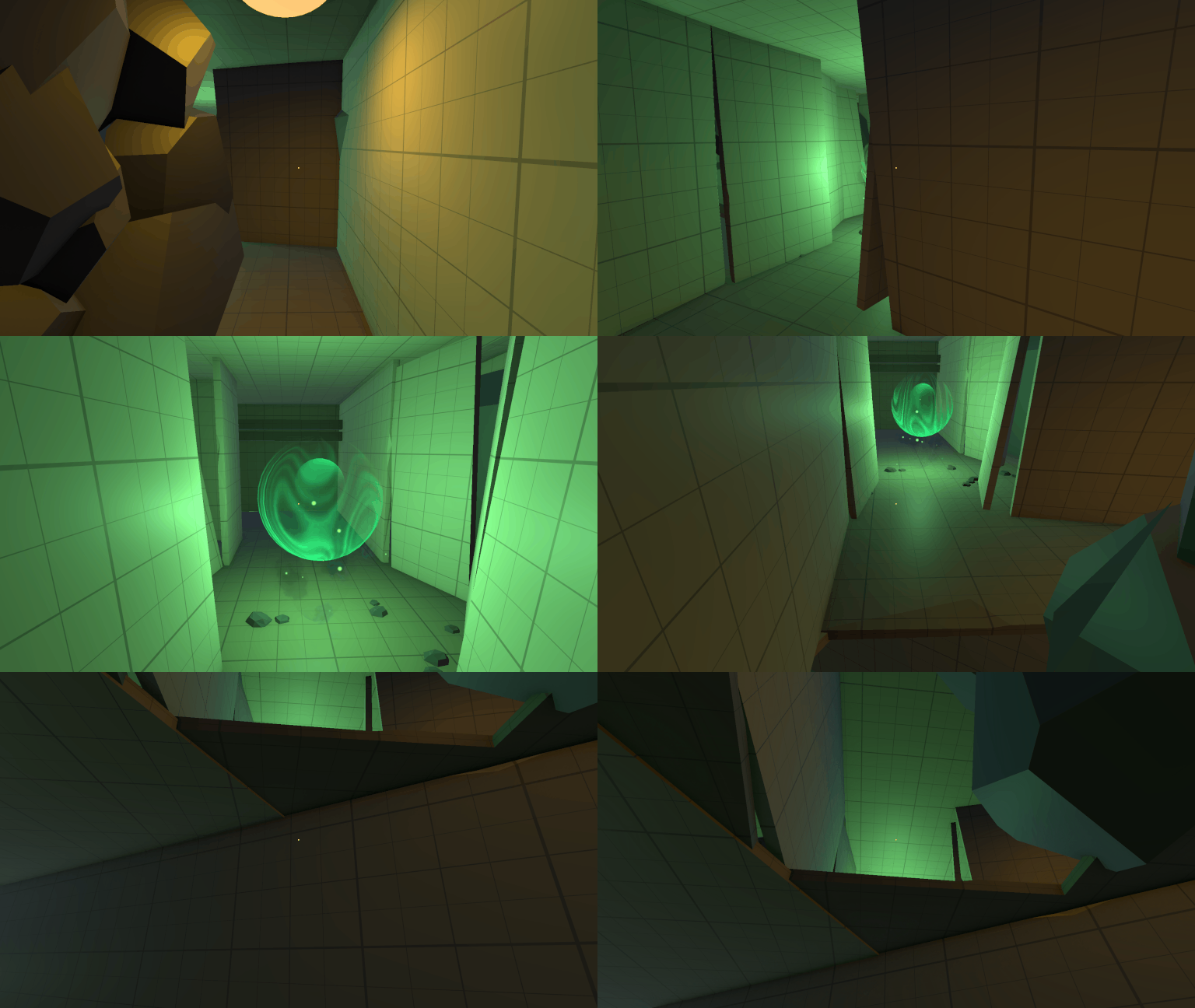
Part of the assignment was that the level must have one ingredient that makes a sound and does something else when the player walks into it. I created these gravity anomalies that push the player away. I decided on this because I had many ideas on how to use them, like avoiding them to not get pushed, or using them as jump pads.
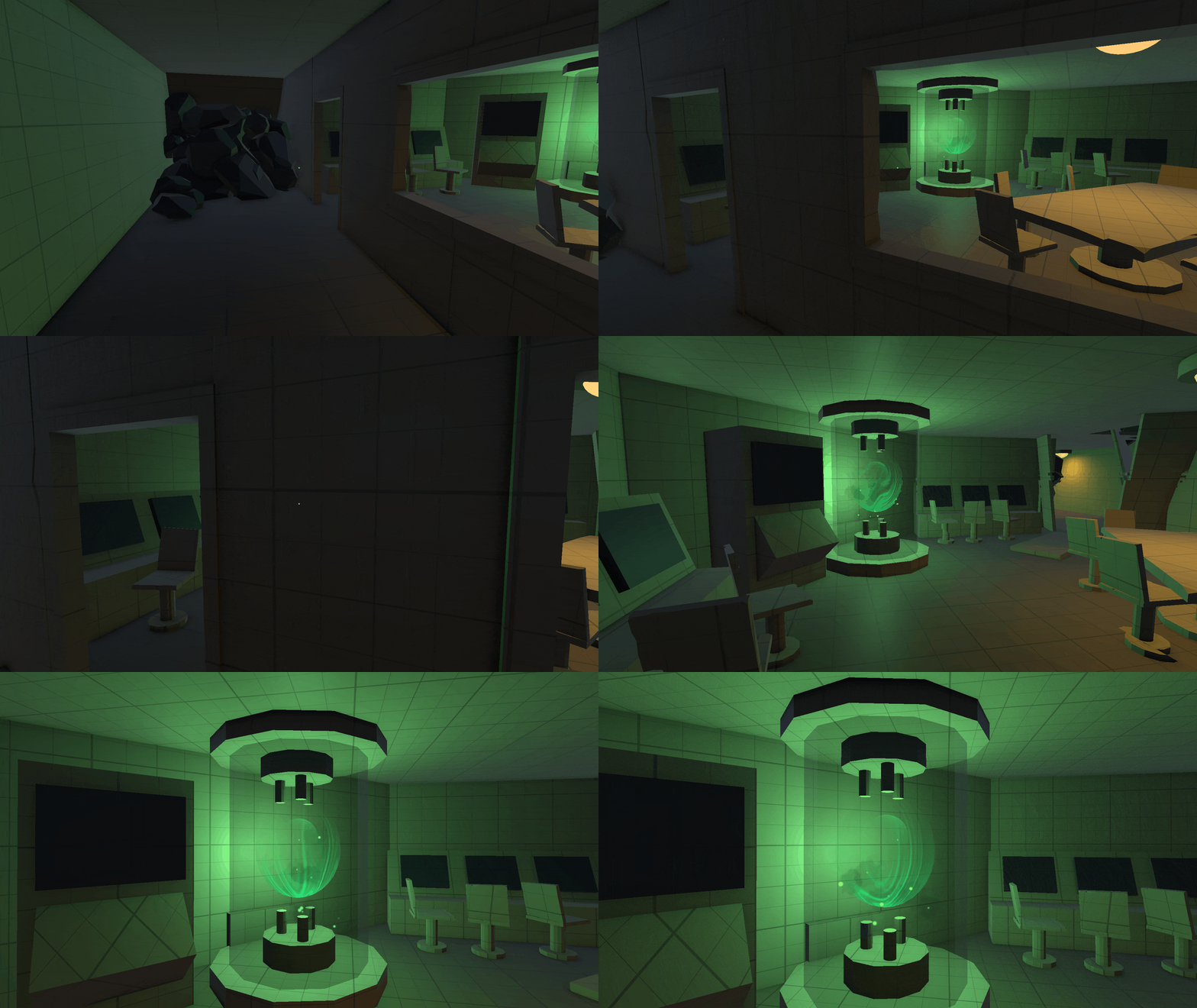
First, the ingredient is teased in an inaccessible tube.
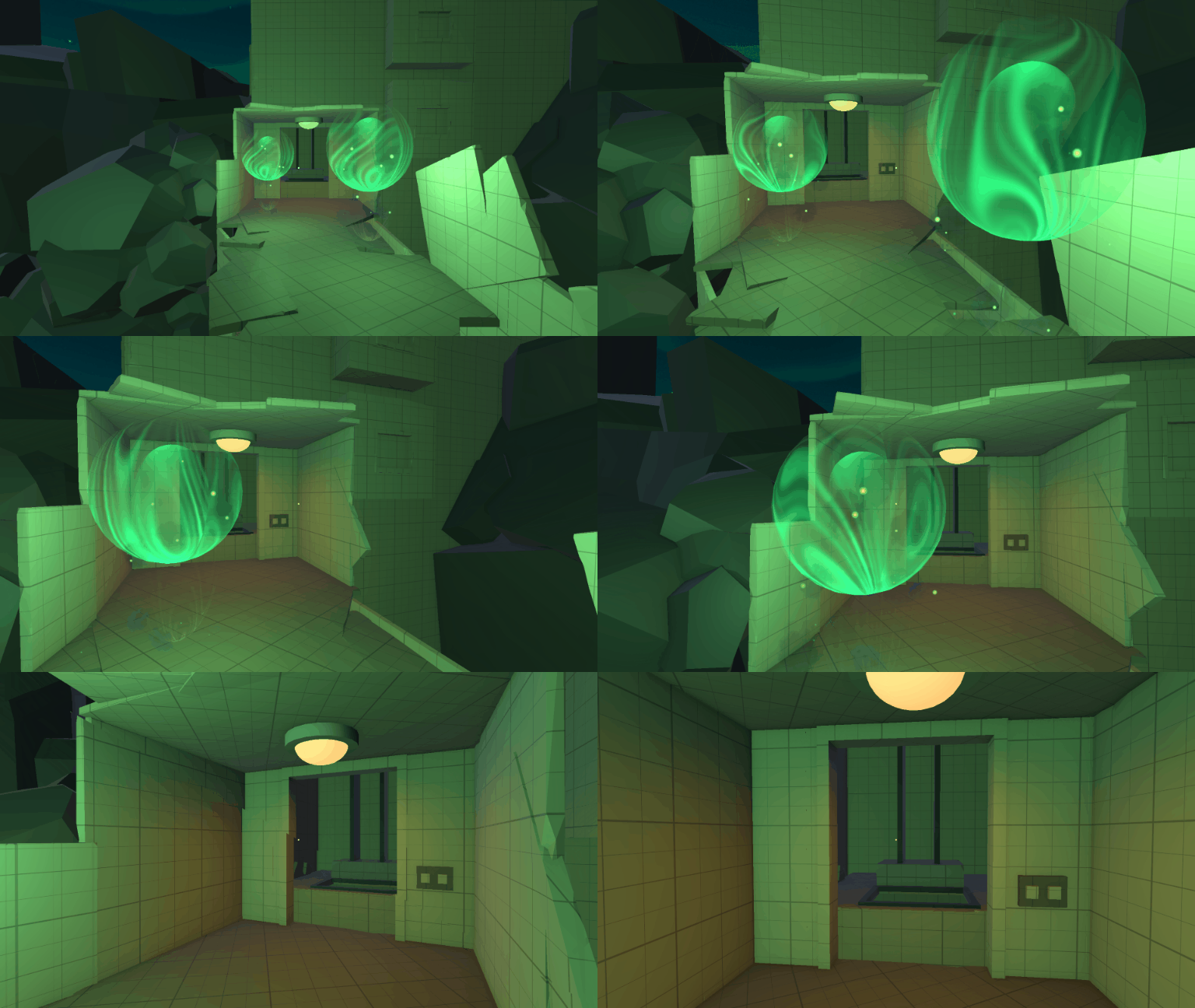
Now that its mechanic is introduced, the players have to avoid it.
Then the player has to use it to get pushed to the other side.
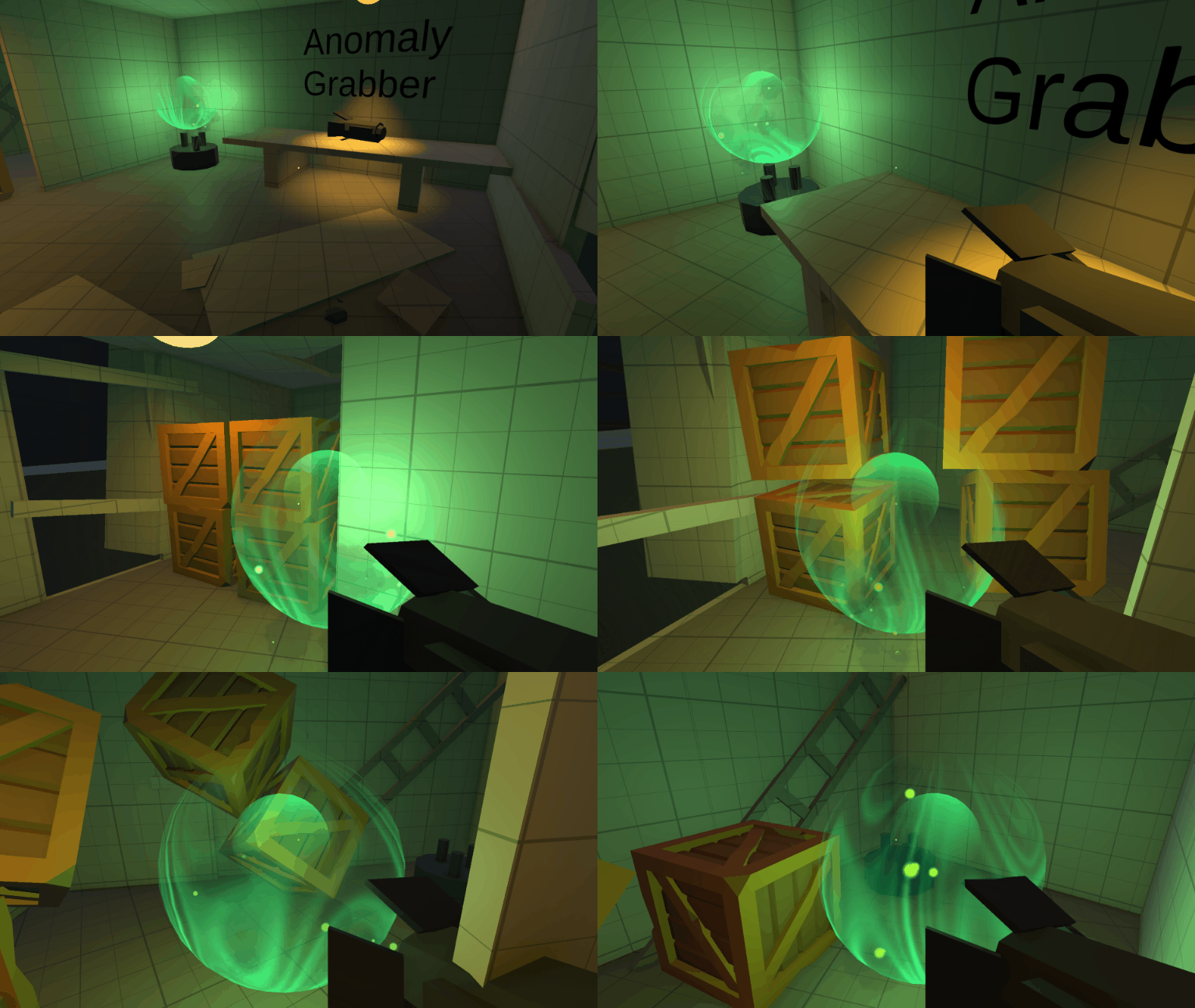
Then the player obtains the anomaly grabber.
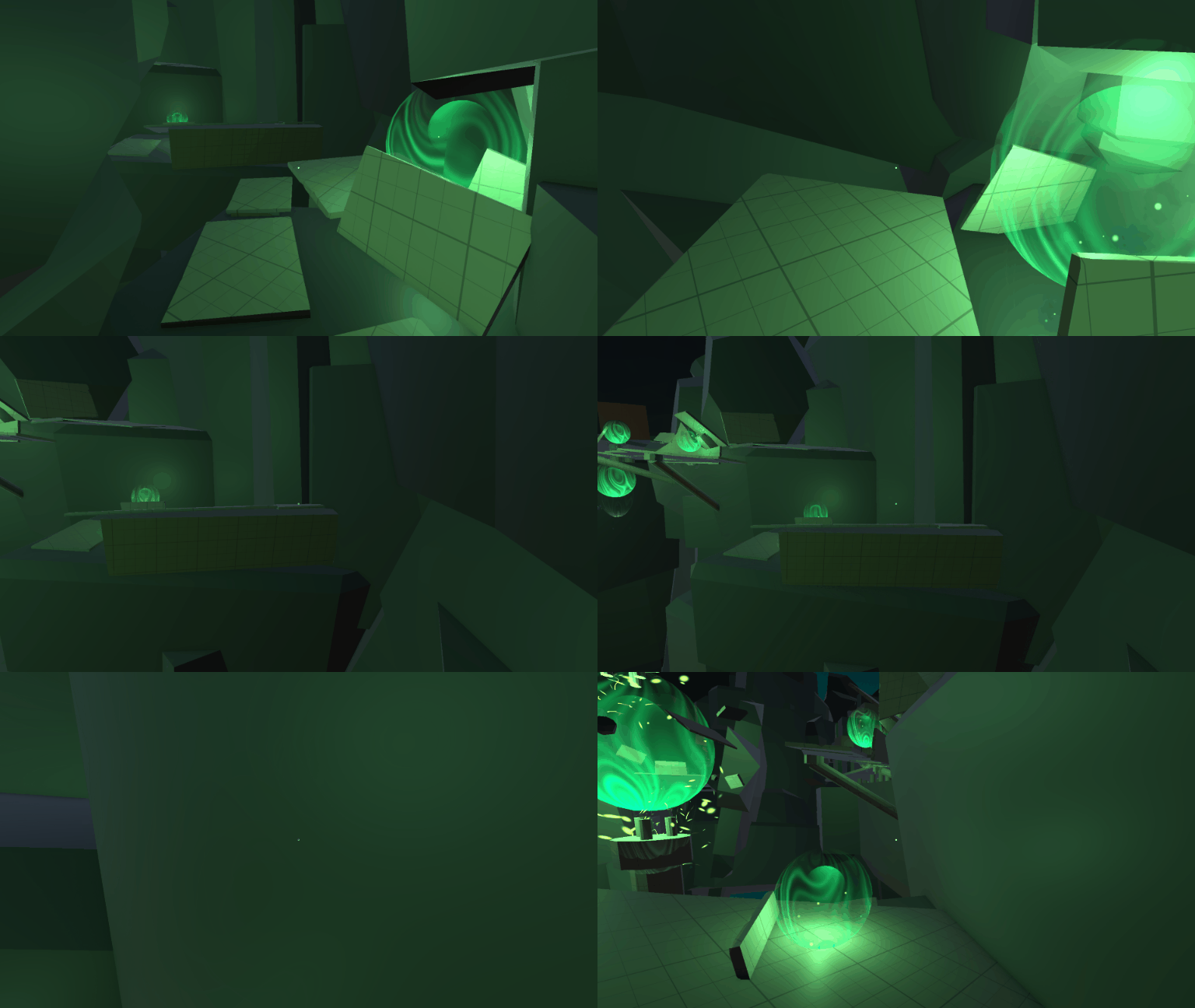
Then the players learn their function by getting pushed into a hole.
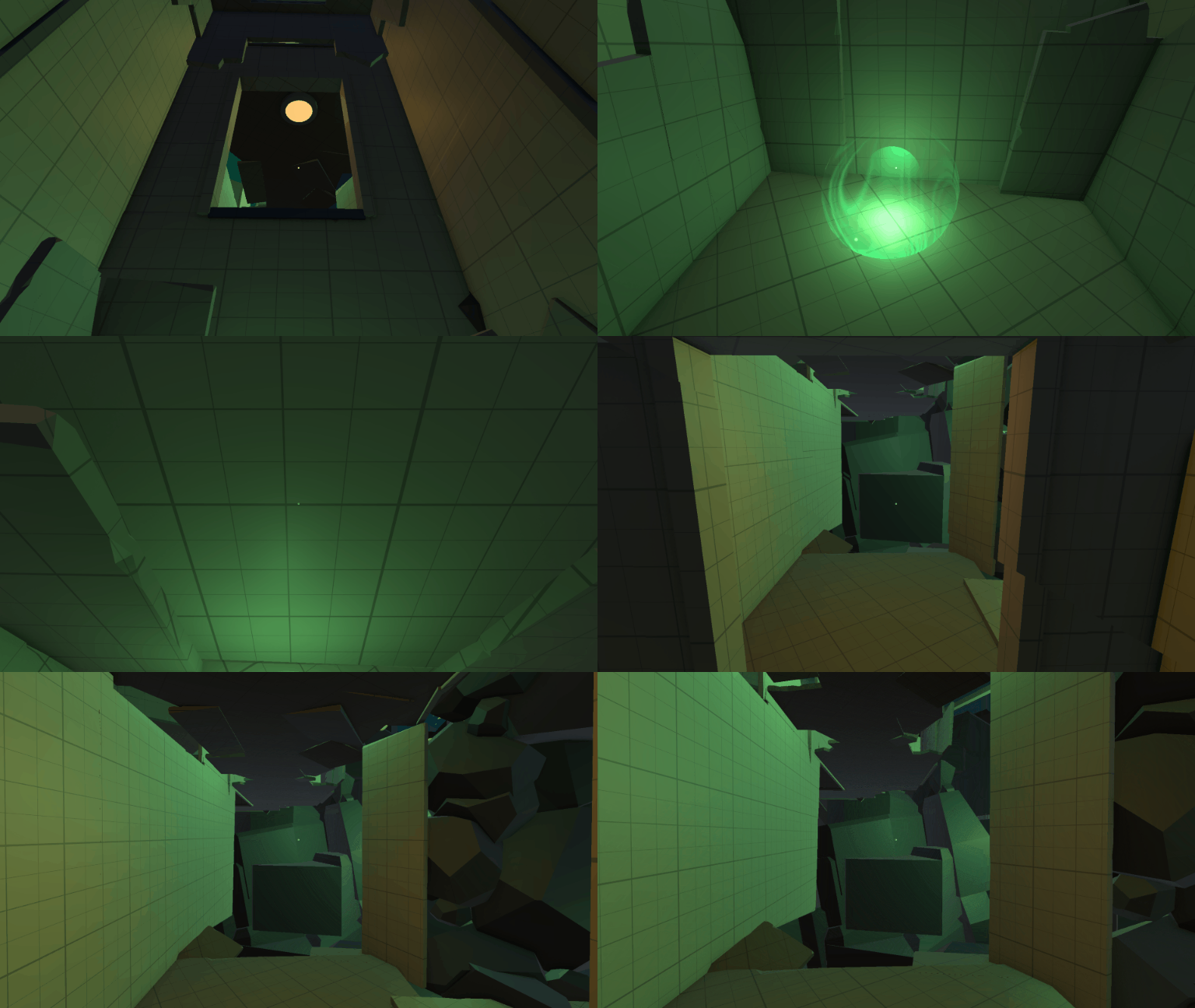
Here, they learn to use the ingredient for platforming.
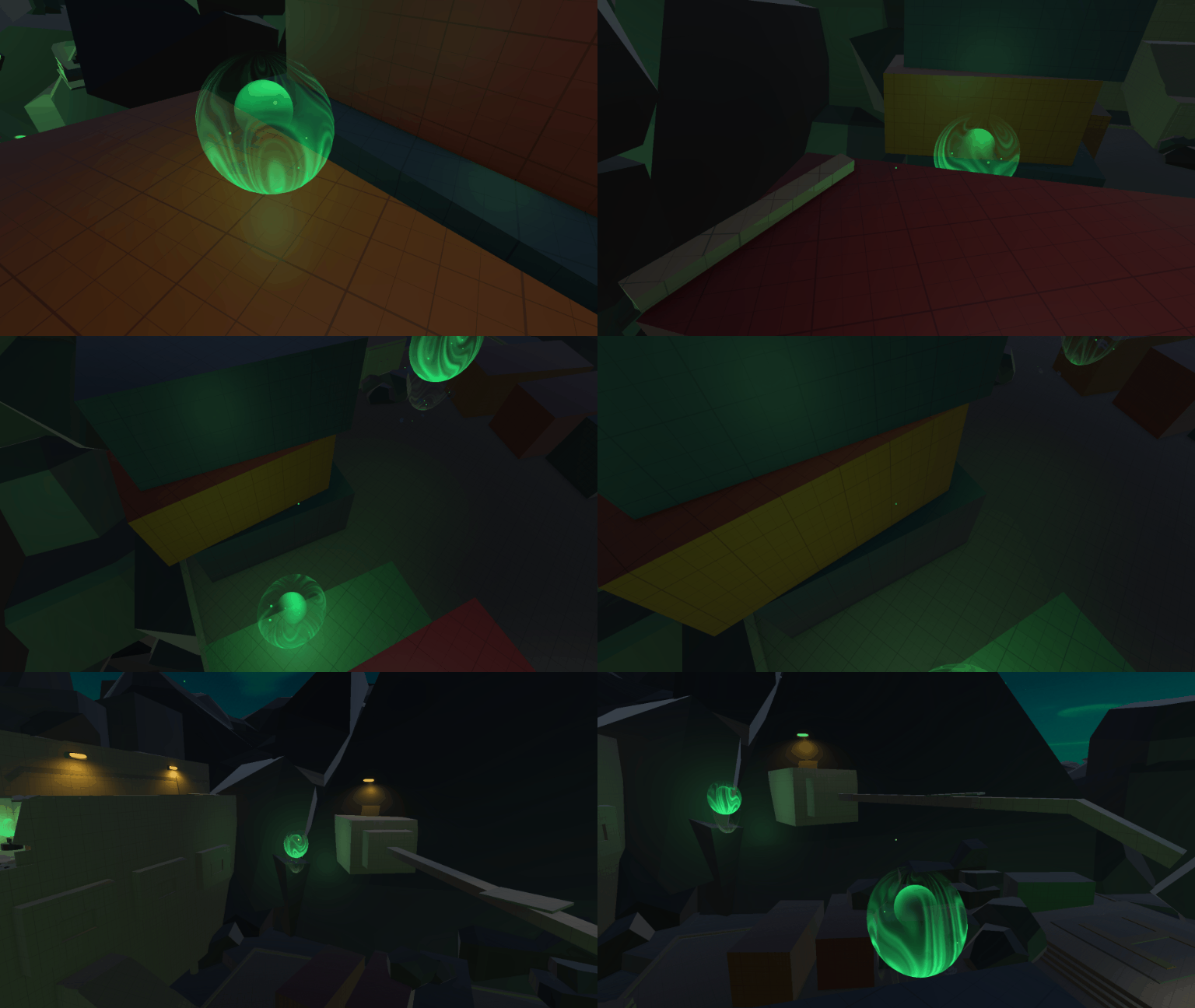
There is some more platforming.
.
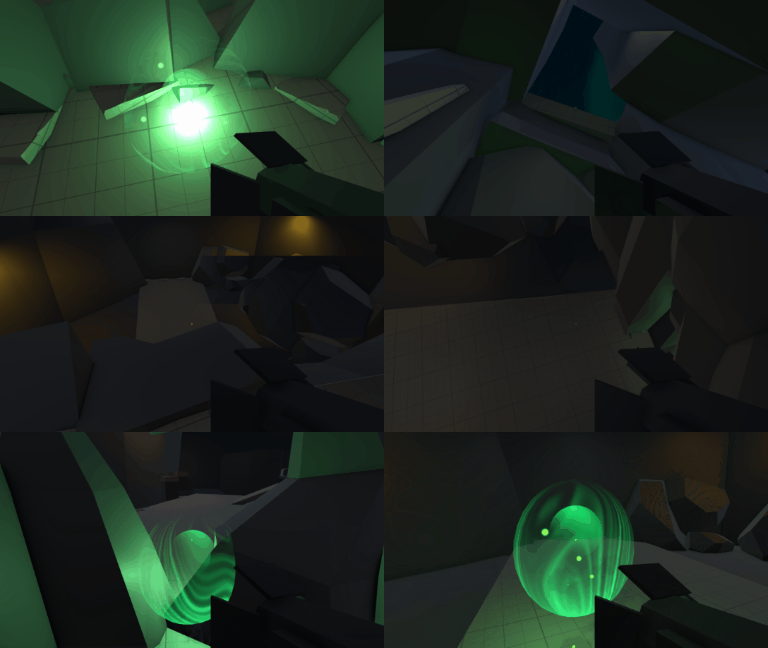
With the grabber, anomalies can be moved to create new jump pads.
Shiver Thy Timbers
I worked as a Level Designer on this project in a team of 6 students during my final semester of studies.
Concept
A top-down stealth action game where the player has to haunt a pirate ship. The player has to spread paranoia by scaring the pirates. To scare a pirate, the player has to find items that can be used to activate traps. When a pirate walks into a trap they get stunned and the player has to scare them.
Design Process
Prototype for proposal
We started from a smaller project that was created to propose the idea to the teachers. I did all the programming for this, and my coleader did all the art assets.
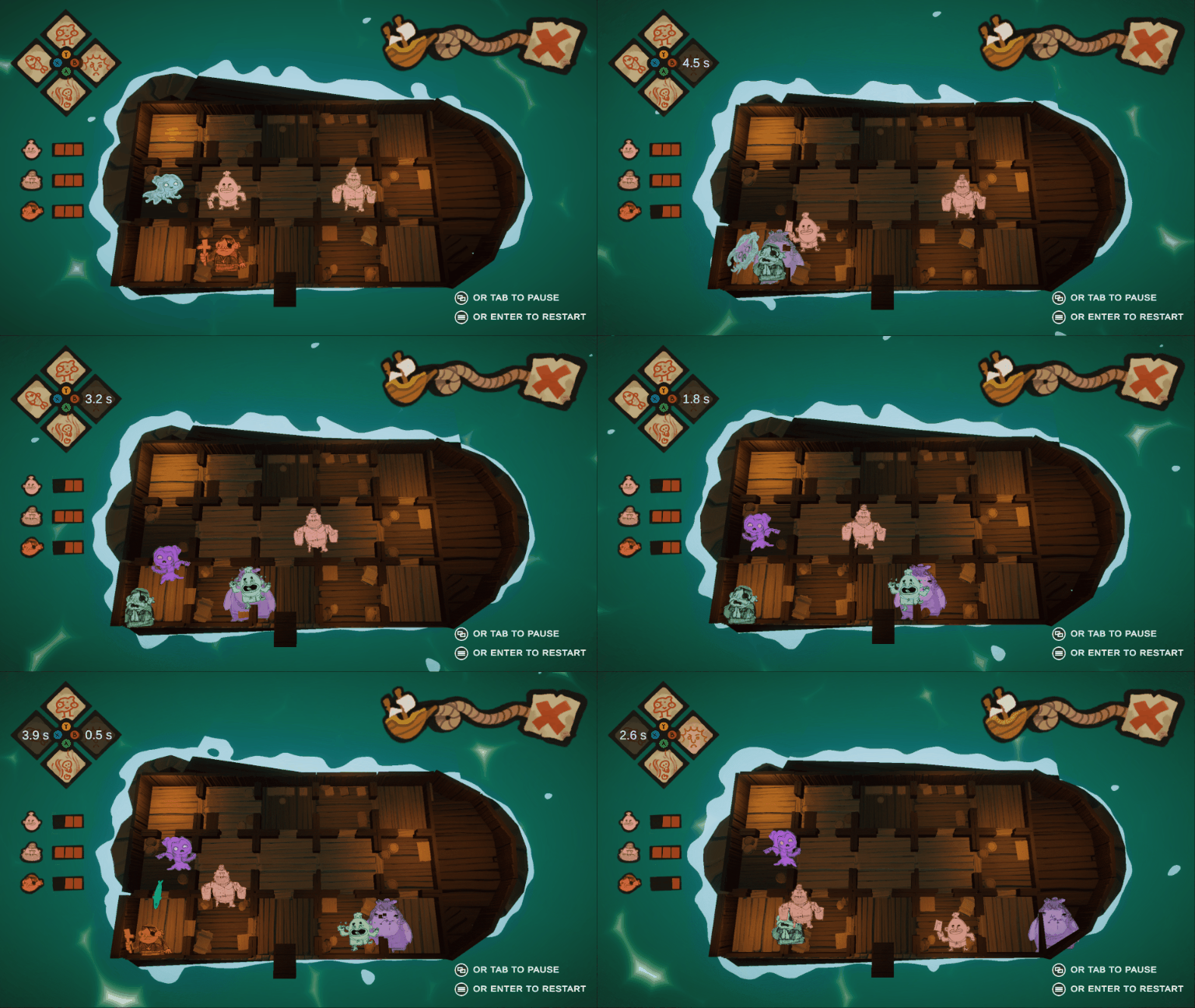
In the first version, the player had to use different abilities to scare pirates until they jumped off the ship. The player was invincible until an ability was used, so after an attack, the player had to escape.There were single-target and area-of-effect abilities that the player had to line up to catch multiple pirates. There were a limited number of uses for each ability, so the player had to be smart about how to use them.When the project was approved and our team increased from 2 to 6 people, we together decided to take a different approach and have the player collect items that will activate traps.Because of this, I decided to change the size of the map and the perspective.
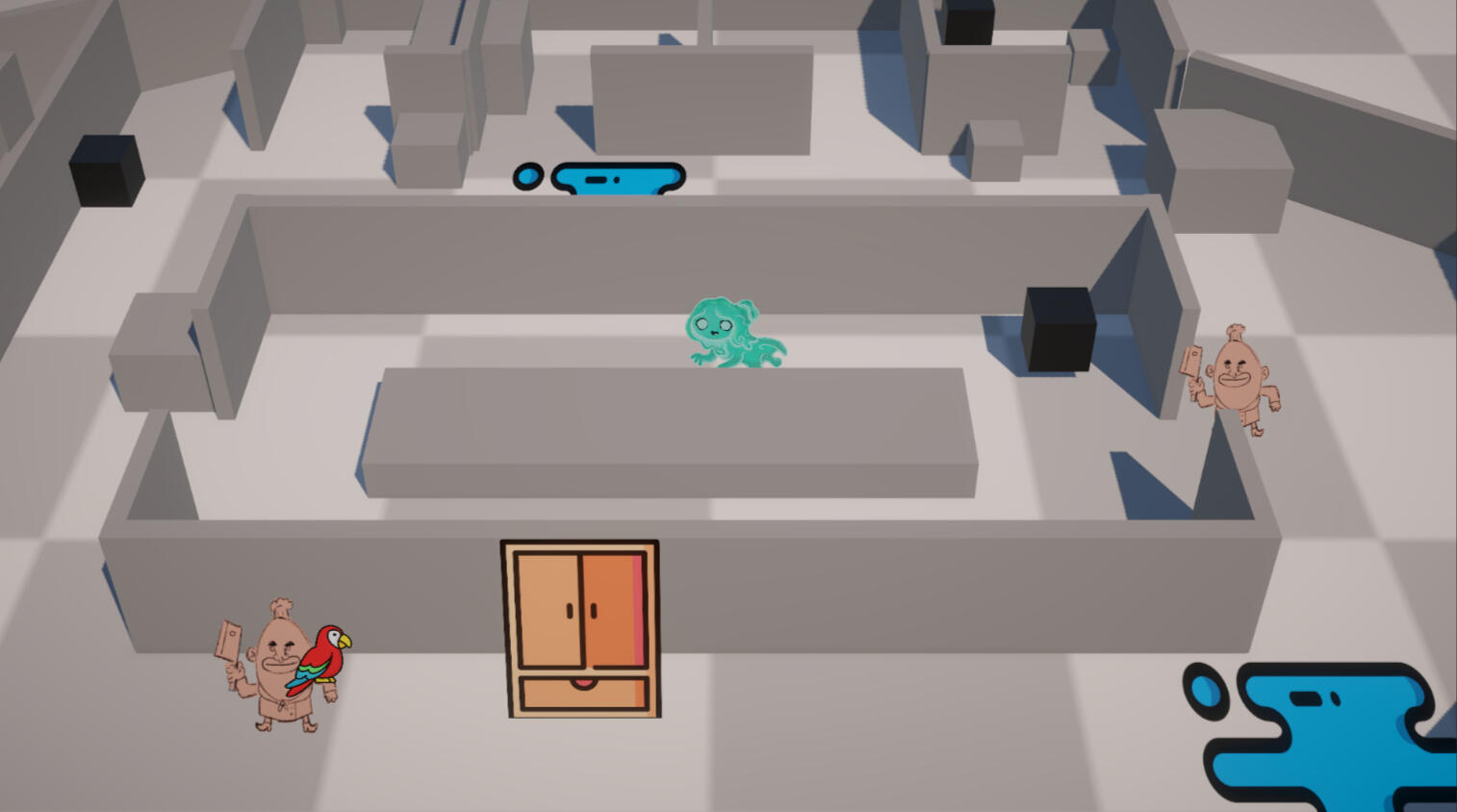
As I was making the prototype, we realised that scaring pirates by setting off traps on a large map would cause people to miss some of these scares. Since seeing the pirates get scared is the most satisfying part of the game, we had to figure out a solution.We decided that the traps should only stun or startle the pirates, and then the player would have to move close to them to scream to scare them. The scream would also attract nearby pirates, so the player has to escape. This way, the player would never miss a scare, and they would have to be more strategic by making them think about an escape plan after the scare.To make escaping easier, I also added an ability that allowed the player to go through walls for a short time.
Ingredients of the first prototype
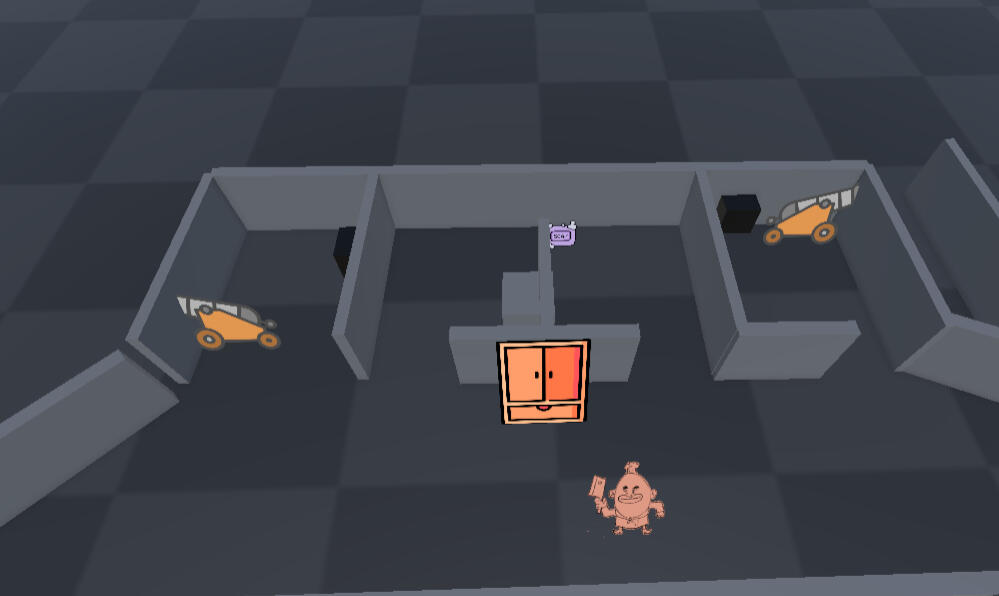
I designed three kinds of traps for this prototype.
The Puddle and the SoapThe player has to interact with the pudde while they have a Soap in their inventory. Then the trap activates. The next pirate who walks into the puddle gets stunned.

The Cannon and CannonballWhen the player uses the cannonball on the cannon, it stuns pirates in an area around the cannon.

Dress and a PictureAll pirates have disappointed their mothers by turning to a life of crime, so they fear her. When the trap is activated, the player is dressed as the mom, and every pirate they walk near gets stunned. Pac-Man's design inspired this.

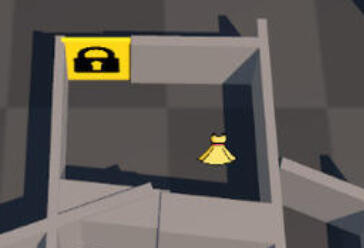
Locked Door and KeyA door that can be opened with the key item. It was used to lock away the most powerful item, the dress that activates the mother disguise ability.

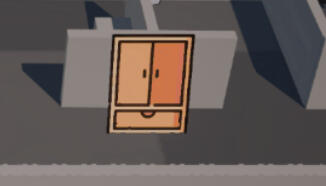
WardrobesThese are hiding spots that do not require an item. Players can hide here if no pirate is chasing them when they enter. It is useful when players have to go past an enemy or quickly hide after a scare before the attracted pirates arrive.

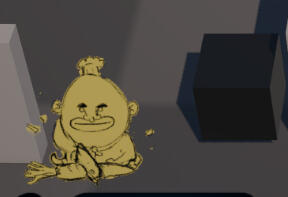
Work StationsPirates patrol between these black boxes. When they arrive at one, they stop and work. While a pirate is working, they cannot see, so players can walk past them. This also means that players can guess where a pirate is going next, and they can plan for it.
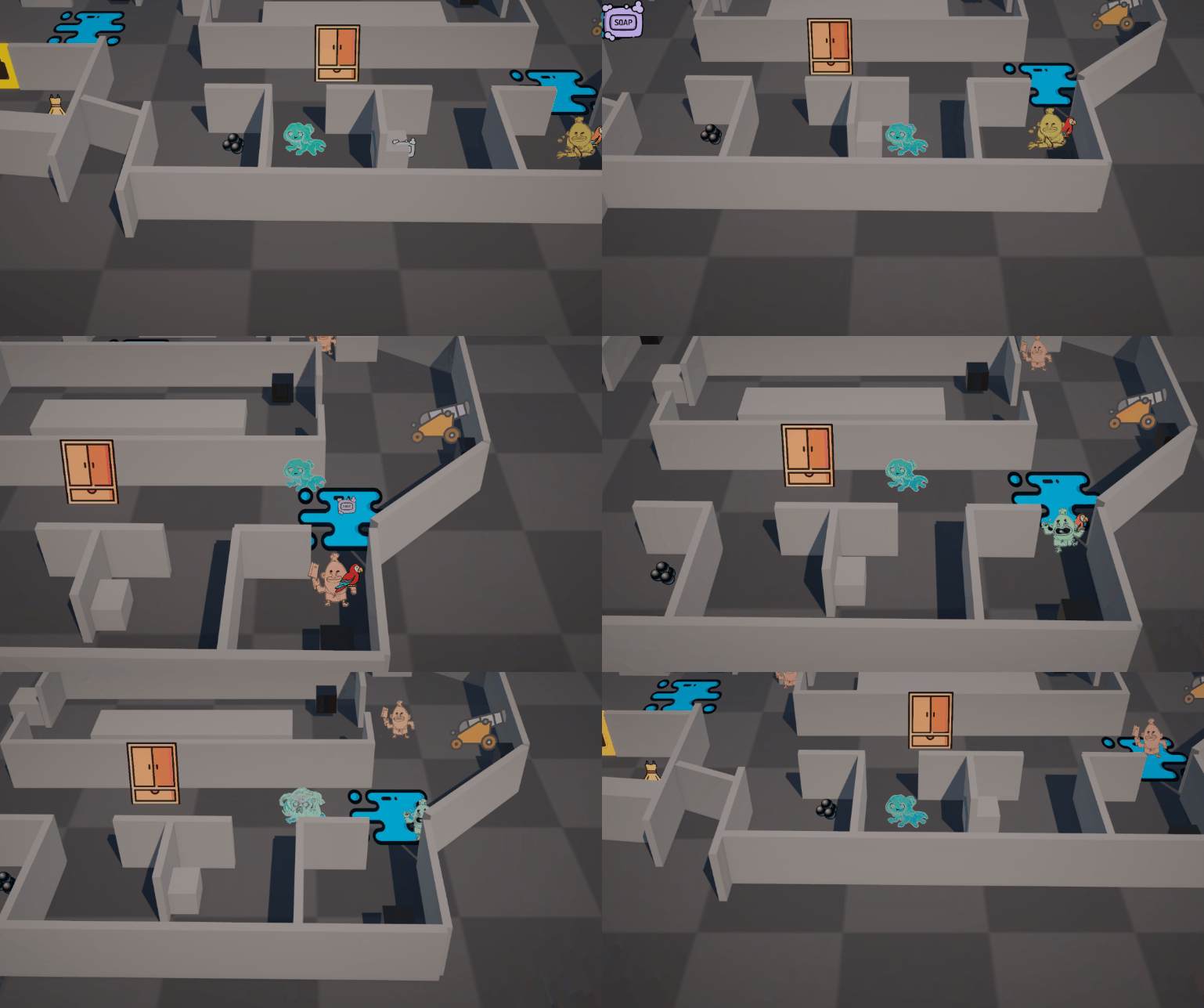
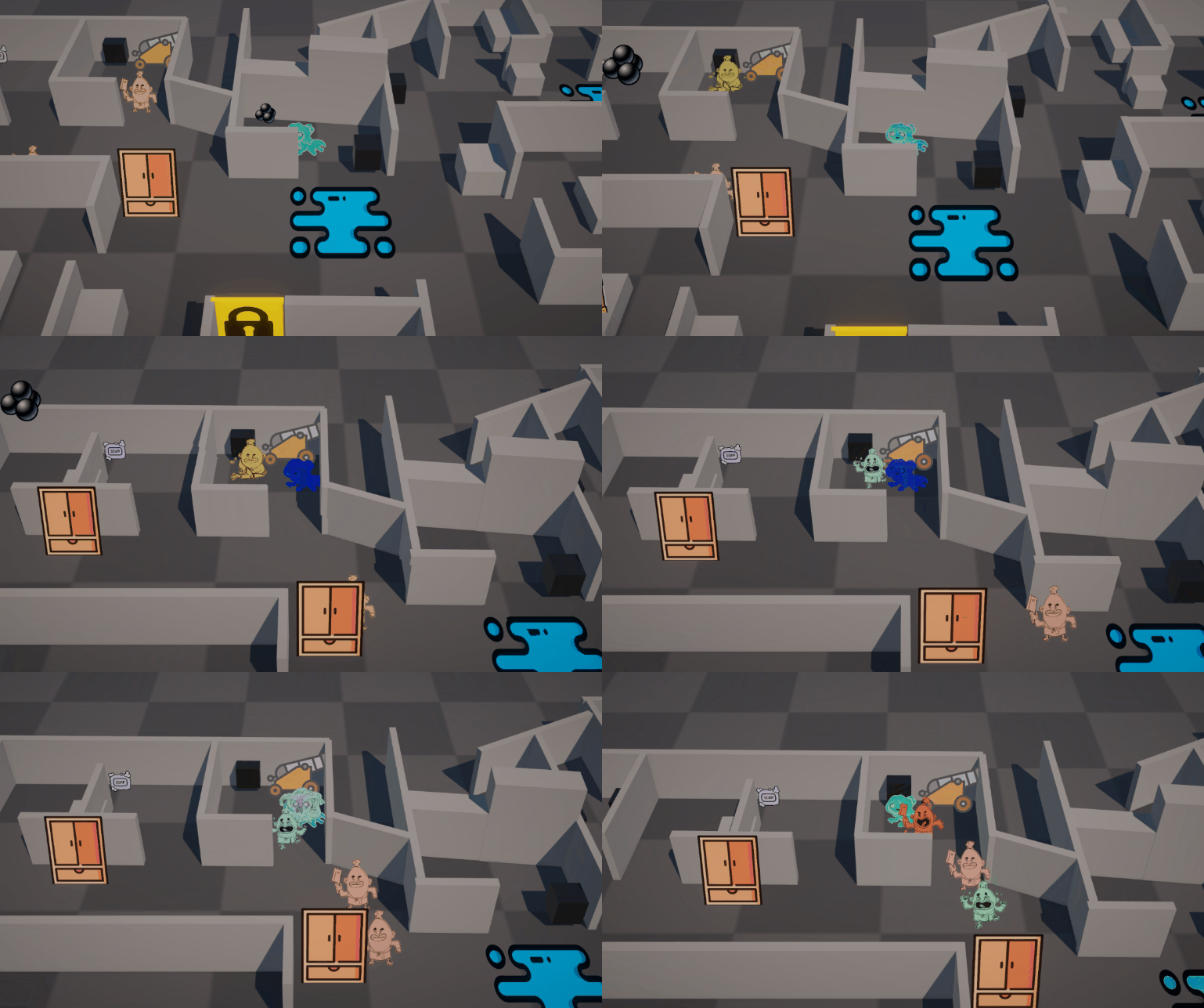
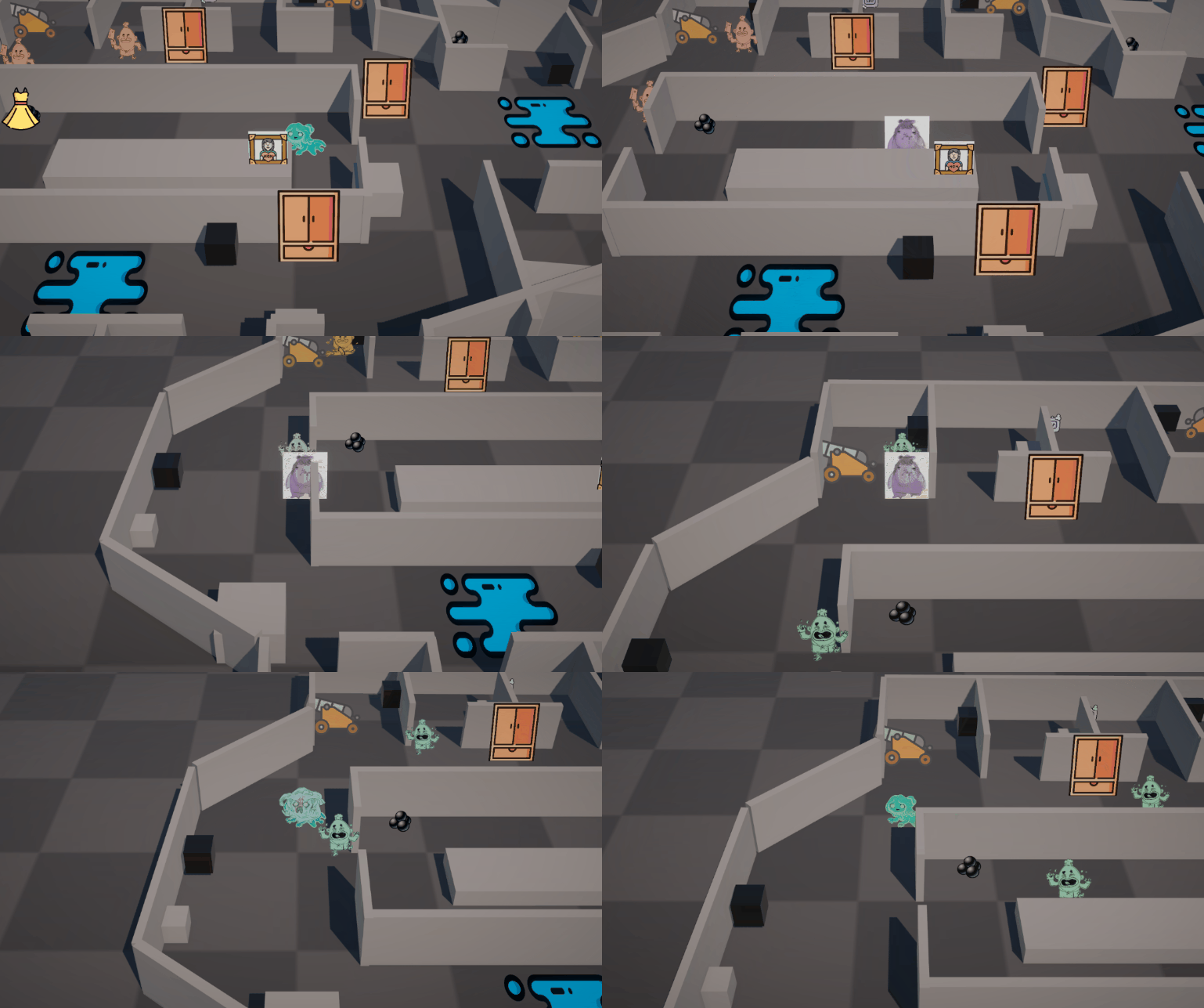
Level design of the first prototype
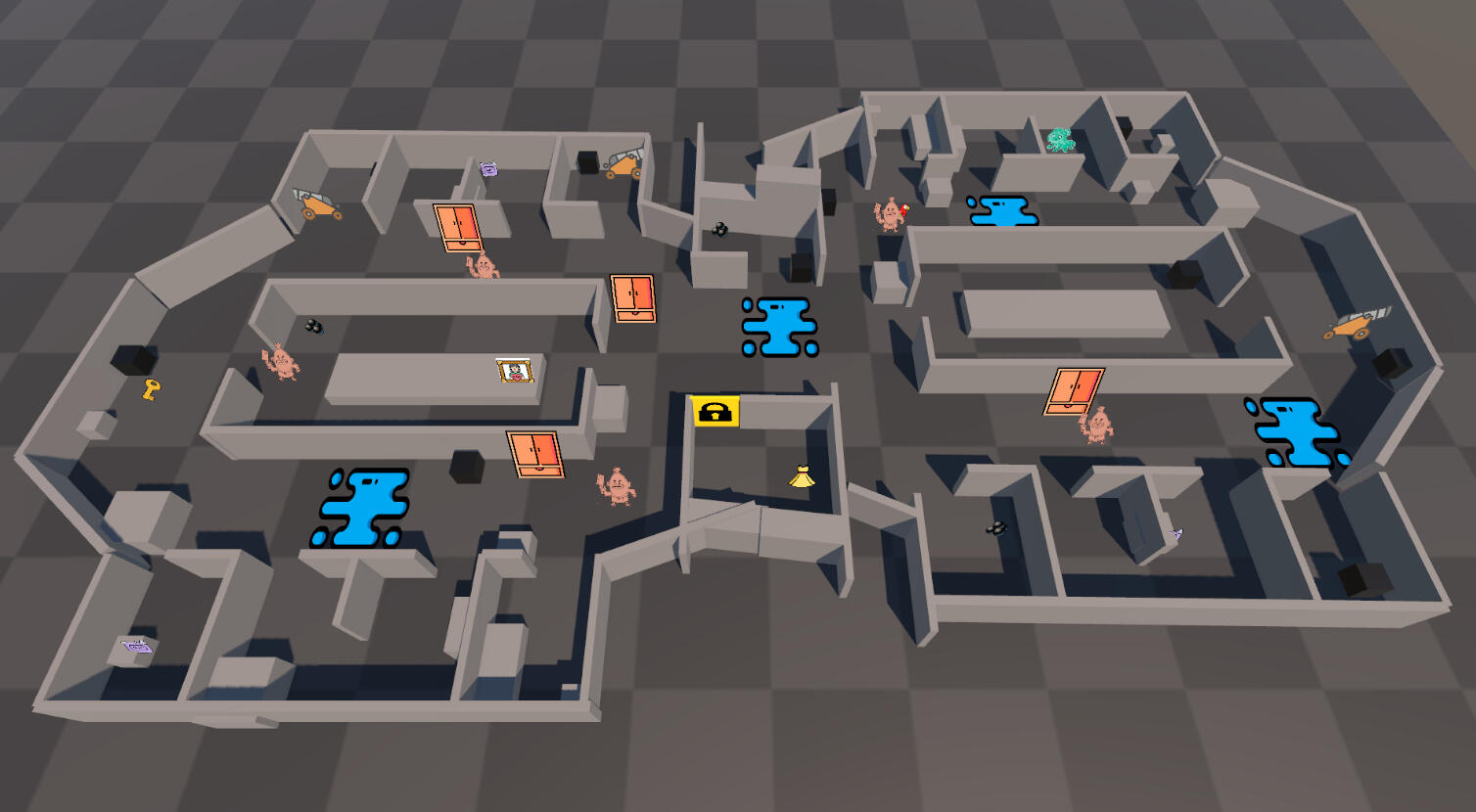
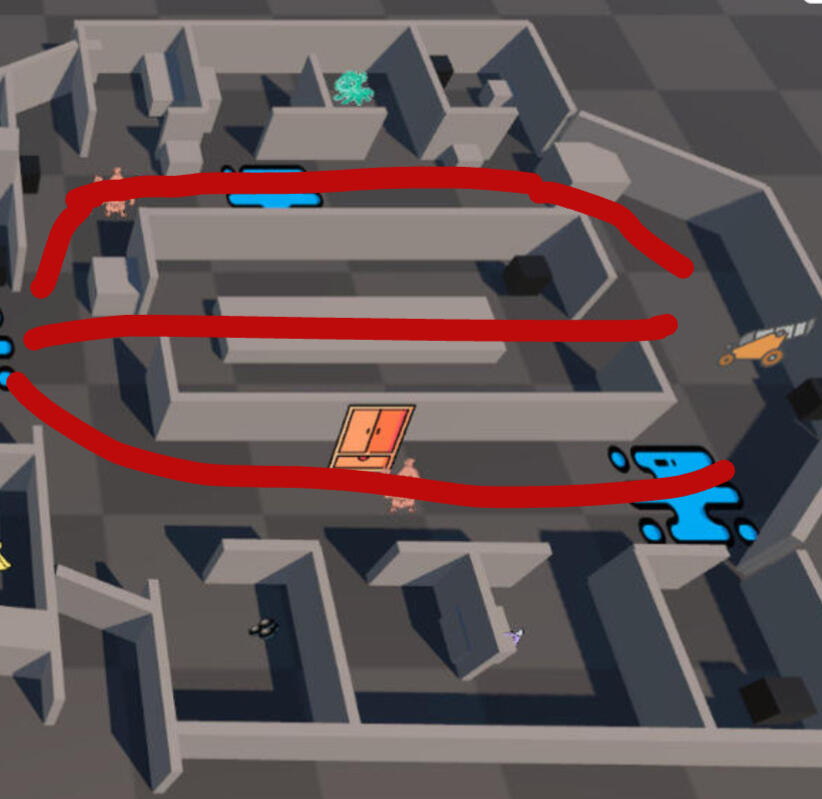
For the final version of the game, I always wanted a large map that the player could explore. In this prototype, I wanted to test the scales and how moving around feels. I also had to test interacting with enemies and the new traps.I gave the big rooms 3 paths, so the player can avoid enemies more easily when moving around. On the sides, I put smaller rooms. Two that open into each other, so the player can go through to avoid a pirate on the main path. And to dead ends that can be used for hiding, but are dangerous, since there is no escape.
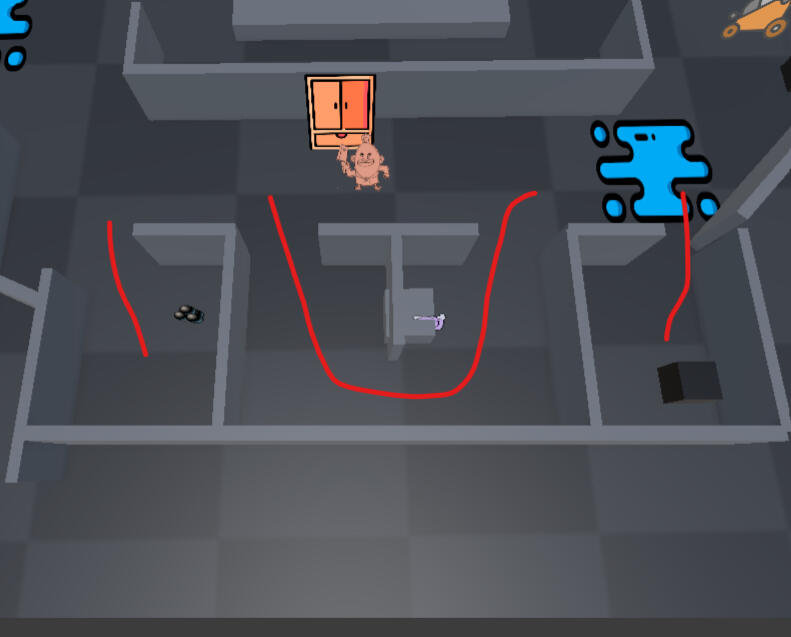
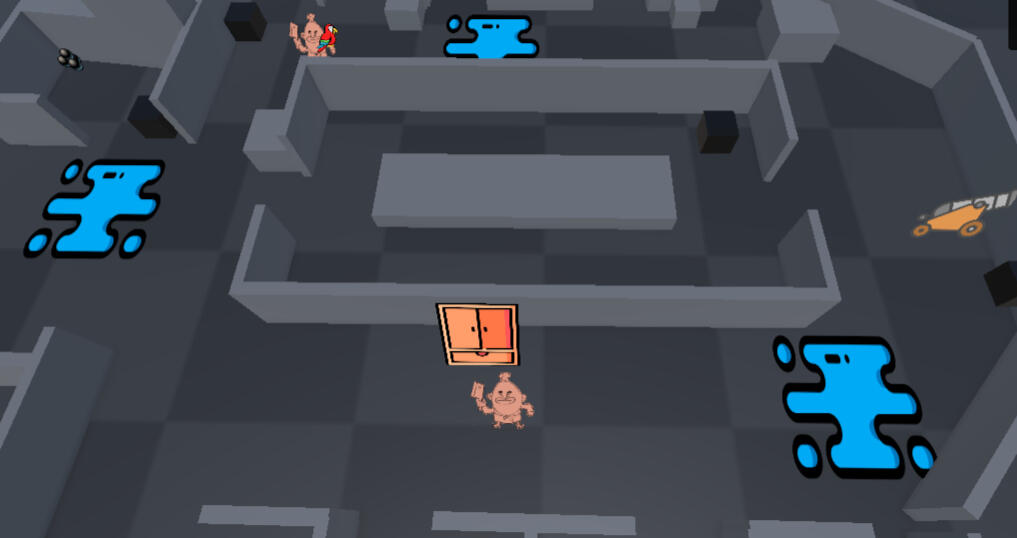
I placed the puddle traps on spots that enemies frequently patrol. I placed the cannons next to work stations, since the pirates need to be near them to be affected and when pirates are working, they cannot see the player.
Playtest results and conclusion
The main takeaway from the playtesting was that the game is fun if the game mechanics are explained to the players. The traps worked, but the cannon was used less because players found it to be a bit too difficult to use, so it will need a buff. However, when the player was able to use it to scare more than one pirate, it felt really good, same with the mother disguise ability. Because of this, I decided that all traps should have the ability to scare multiple people at once.One thing I was not expecting was that players loved the going through walls ability. I meant that to be a rarely used get-out-of-trouble-free card, but people liked using it for traversal. Because of this, I decreased the cooldown from 20 seconds to 5 seconds and decided to build the levels with this traversal ability in mind.
Vision cone prototype
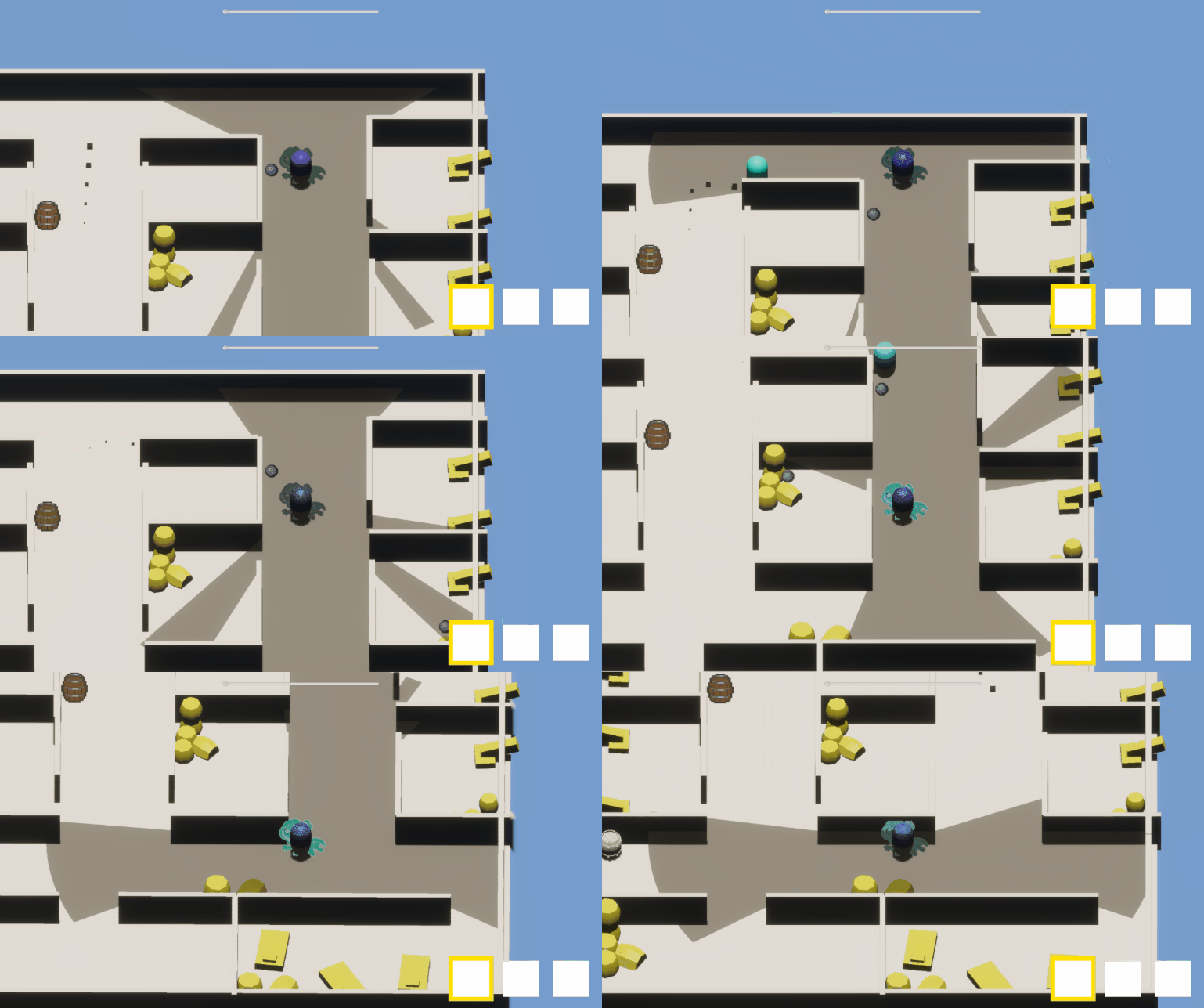
We also had another prototype made by the main programmer in the team. This tested a vision cone mechanic that meant the player only saw enemies, traps, and items when they had a line of sight.Not being able to see enemies had to be removed. With stealth games, it is important that players have the advantage of information when not noticed. With the hidden enemies, this prototype felt more like survival horror, which could have been good, but it was not the kind og game we wanted to make.However, the hidden items made the player explore every room on the map since they all could hide something. For this, I decided to move forward with the line of sight mechanic, but only for items.
Creating the First Level
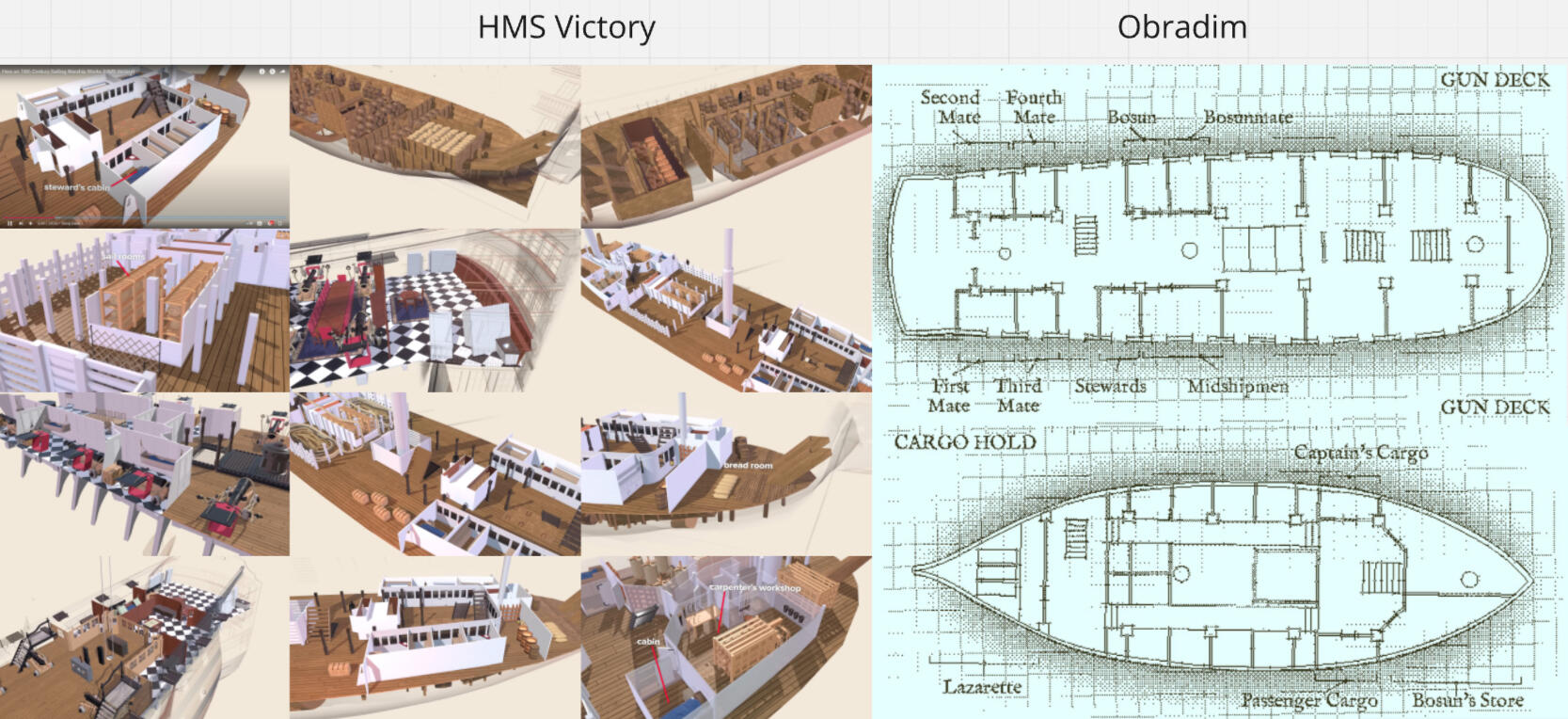
Before I started doing anything in the engine, I researched what old ship interiors look like. I watched around 4 hours' worth of old sailing ship lore and gathered references.
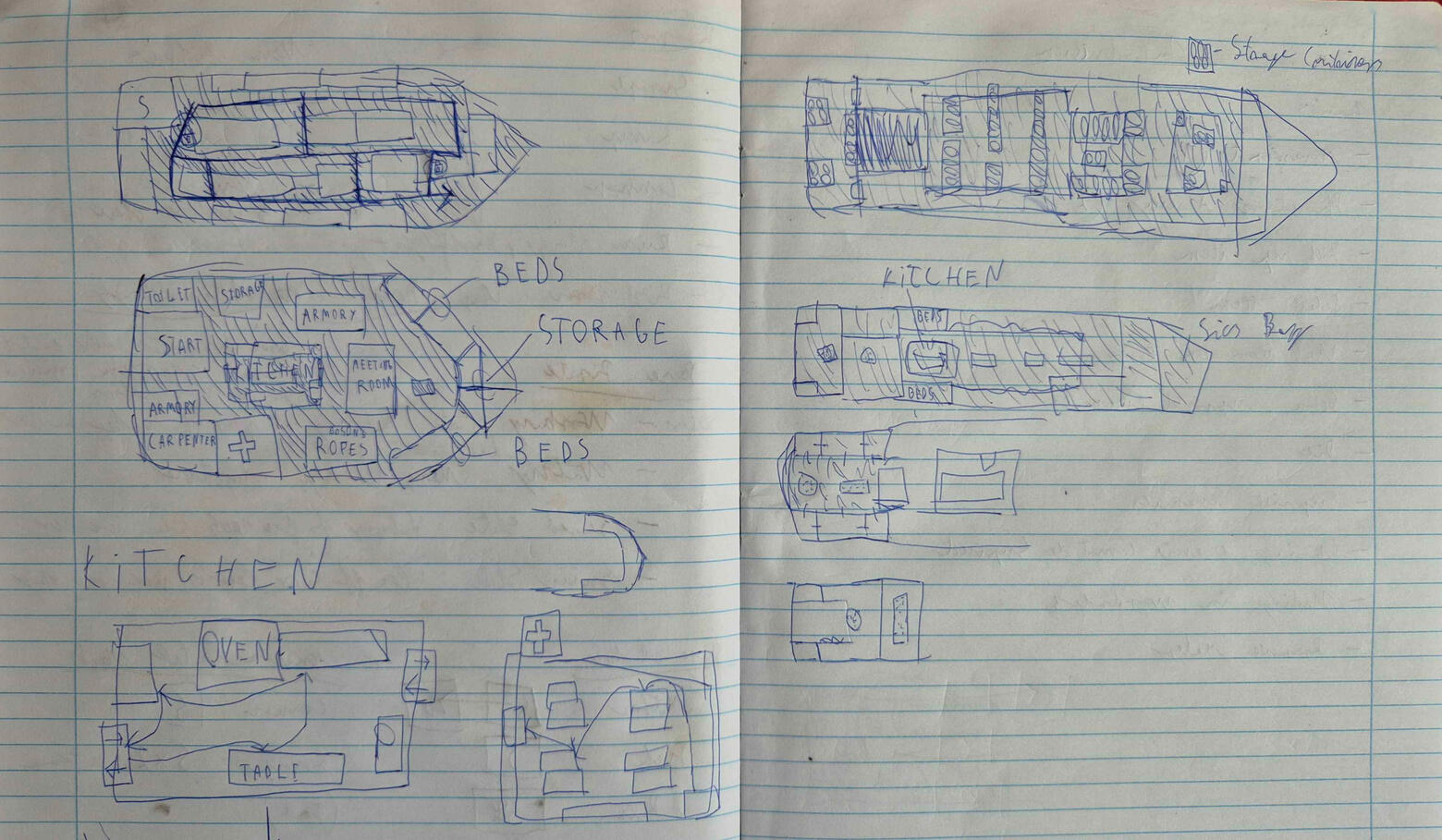
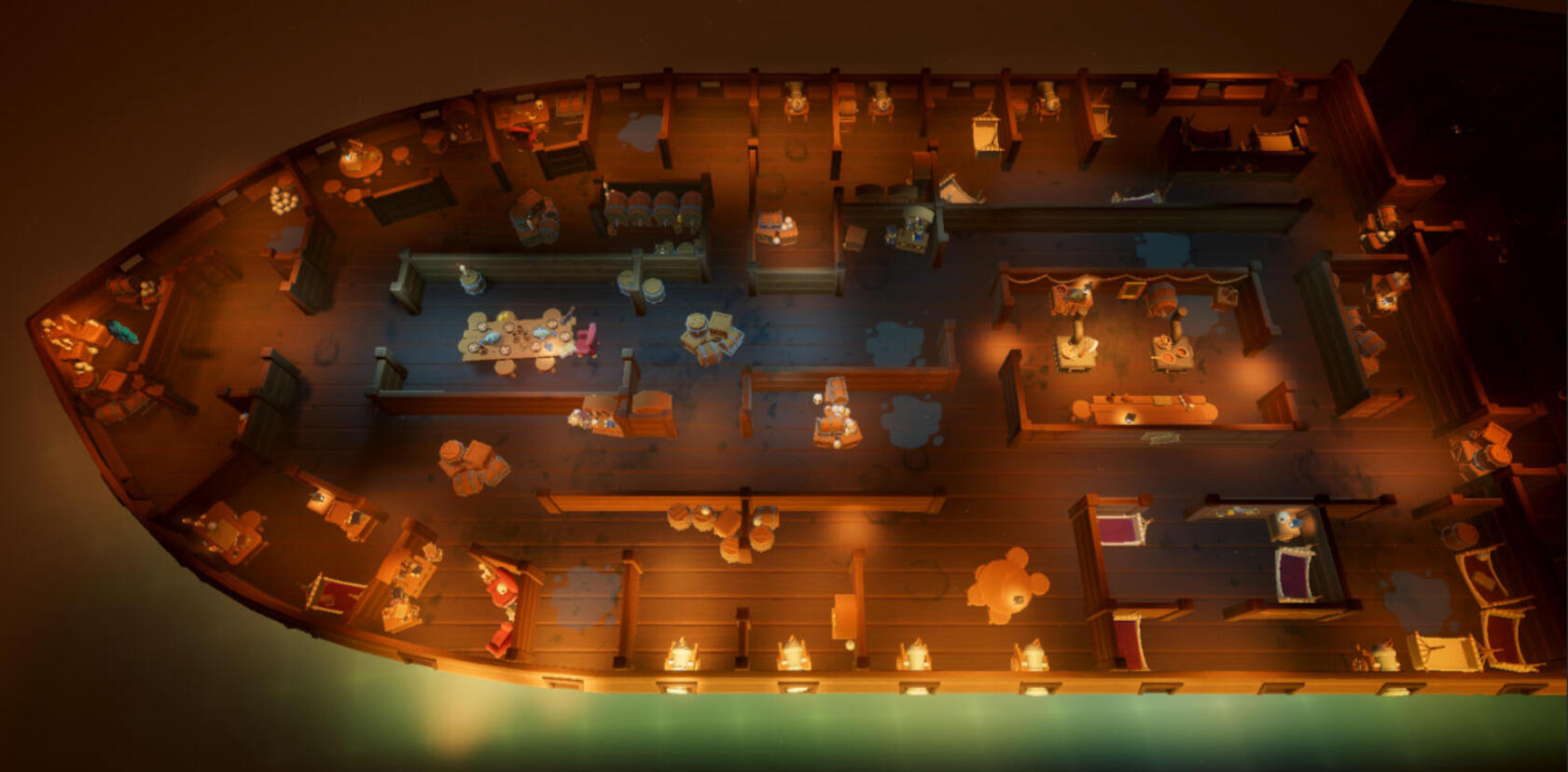
Then I started ideating on layouts and the different room types. Then made a blockout and improved from there.
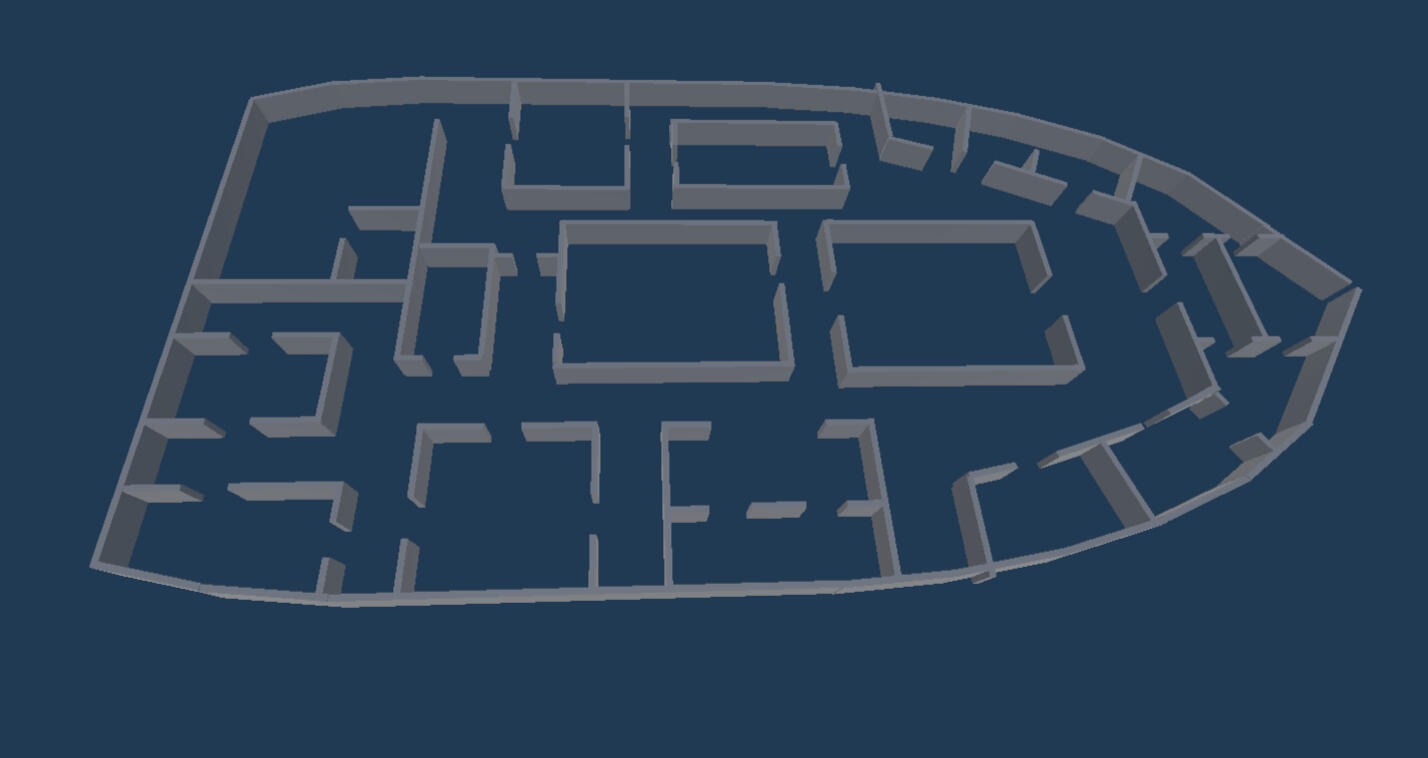
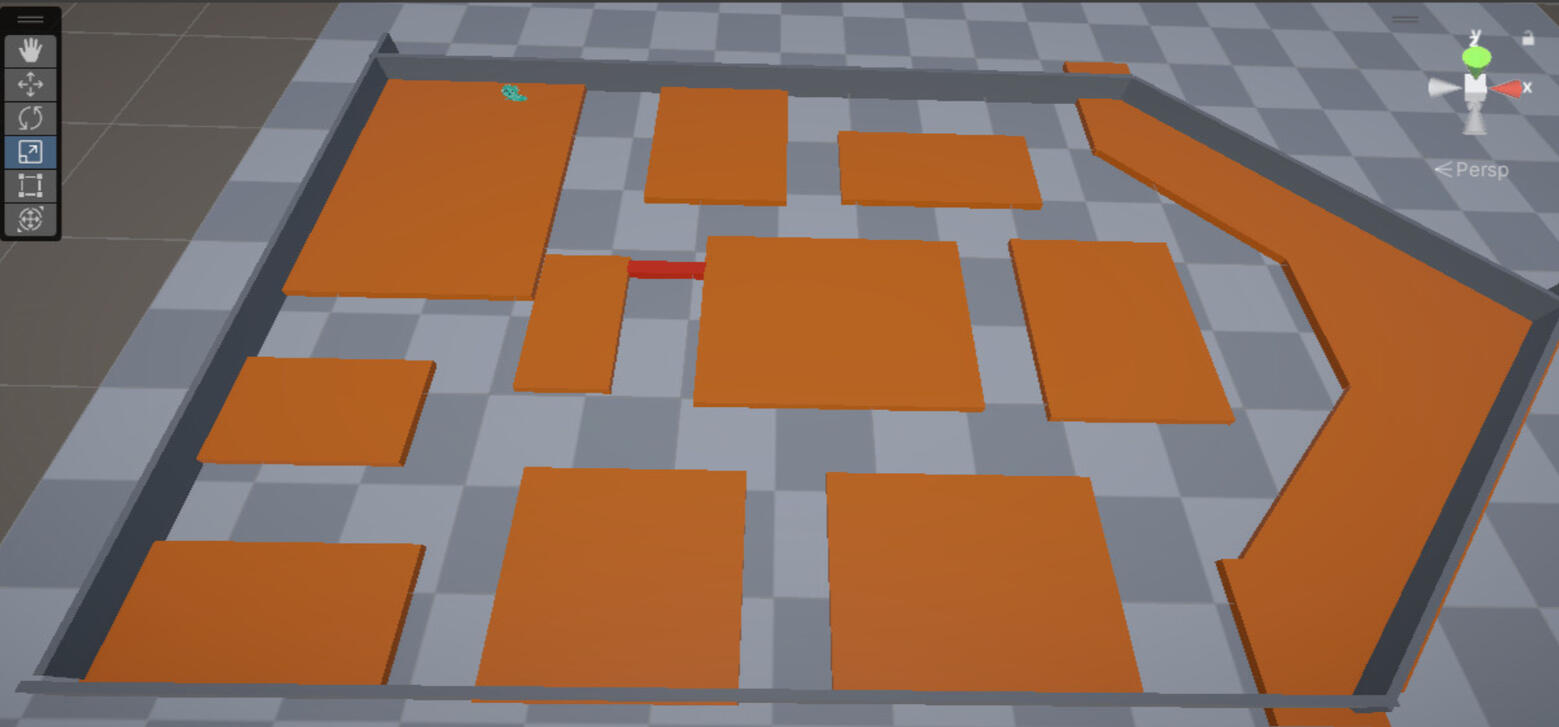
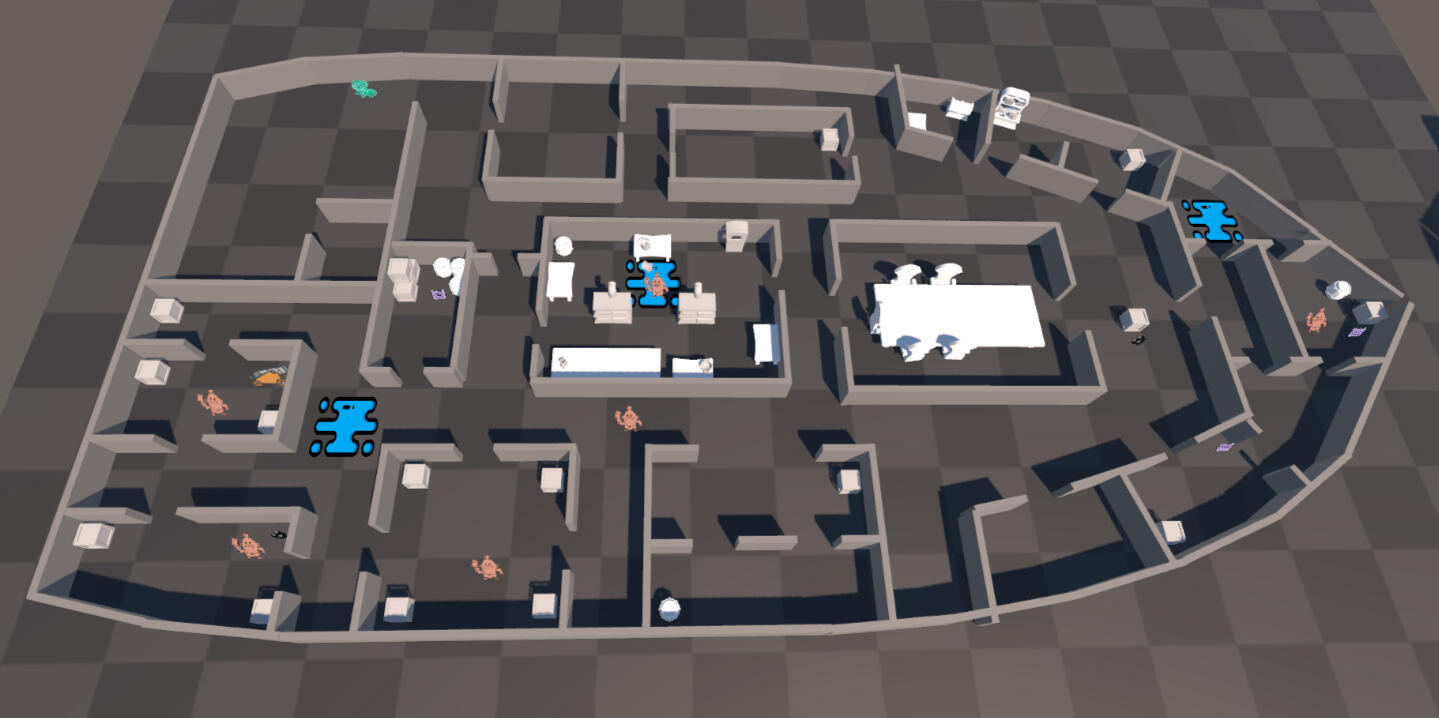
After I had a layout that felt good to play in, I had a long discussion with the environment artists about the different rooms.One big thing I had to change was that I based the layout on an underwater deck, but the artists wanted windows for lighting and cannon holes, so I had to move some side walls to make the windows symmetric.I originally also wanted the player to start in the captain's cabin because that is where they escape from, but we decided that going from the front of the ship makes more sense, since the goal of the game is to reach the captain.
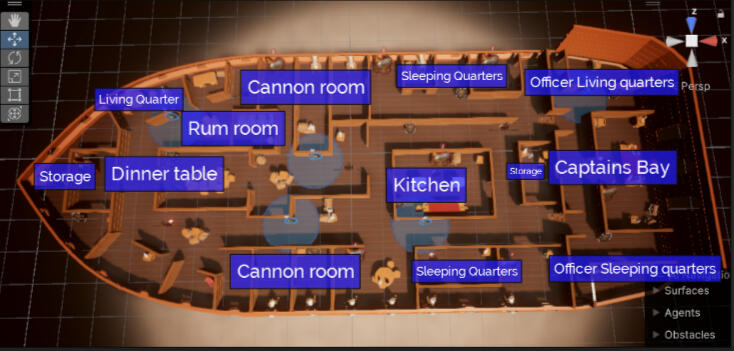
I also planned out where the pirates should patrol and where they should stop. I did the plan on a Miro board and assigned each pirate a color and tried to set patrol routes in a way that every part of the ship is being patrolled. Then I adjusted timings and start positions based on playtesting results.
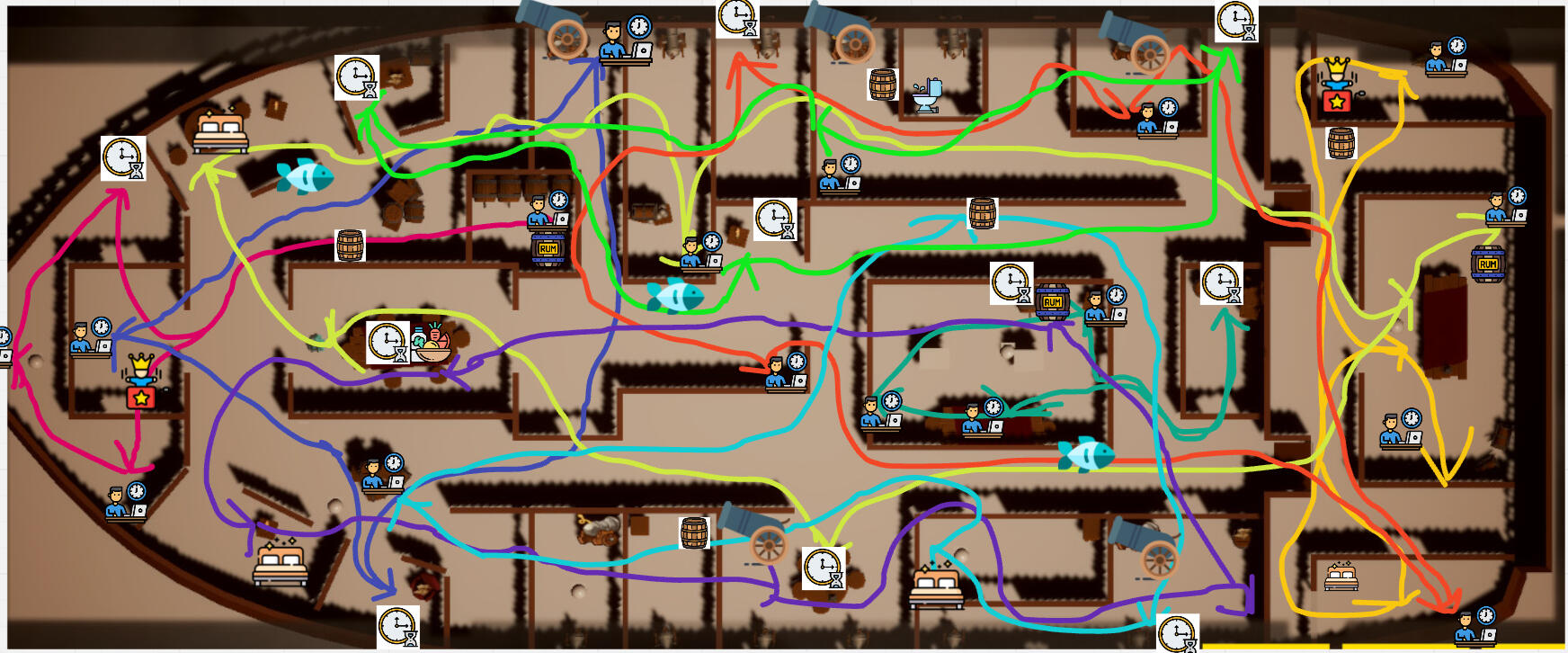
Final Layout
I also planned out where the pirates should patrol and where they should stop. I did the plan on a Miro board and assigned each pirate a color and tried to set patrol routes in a way that every part of the ship is being patrolled. Then I adjusted timings and start positions based on playtesting results.
Ingredients
The Cannon and GunpowderWhen activated, the cannon stuns pirates in a radius after a short delay.

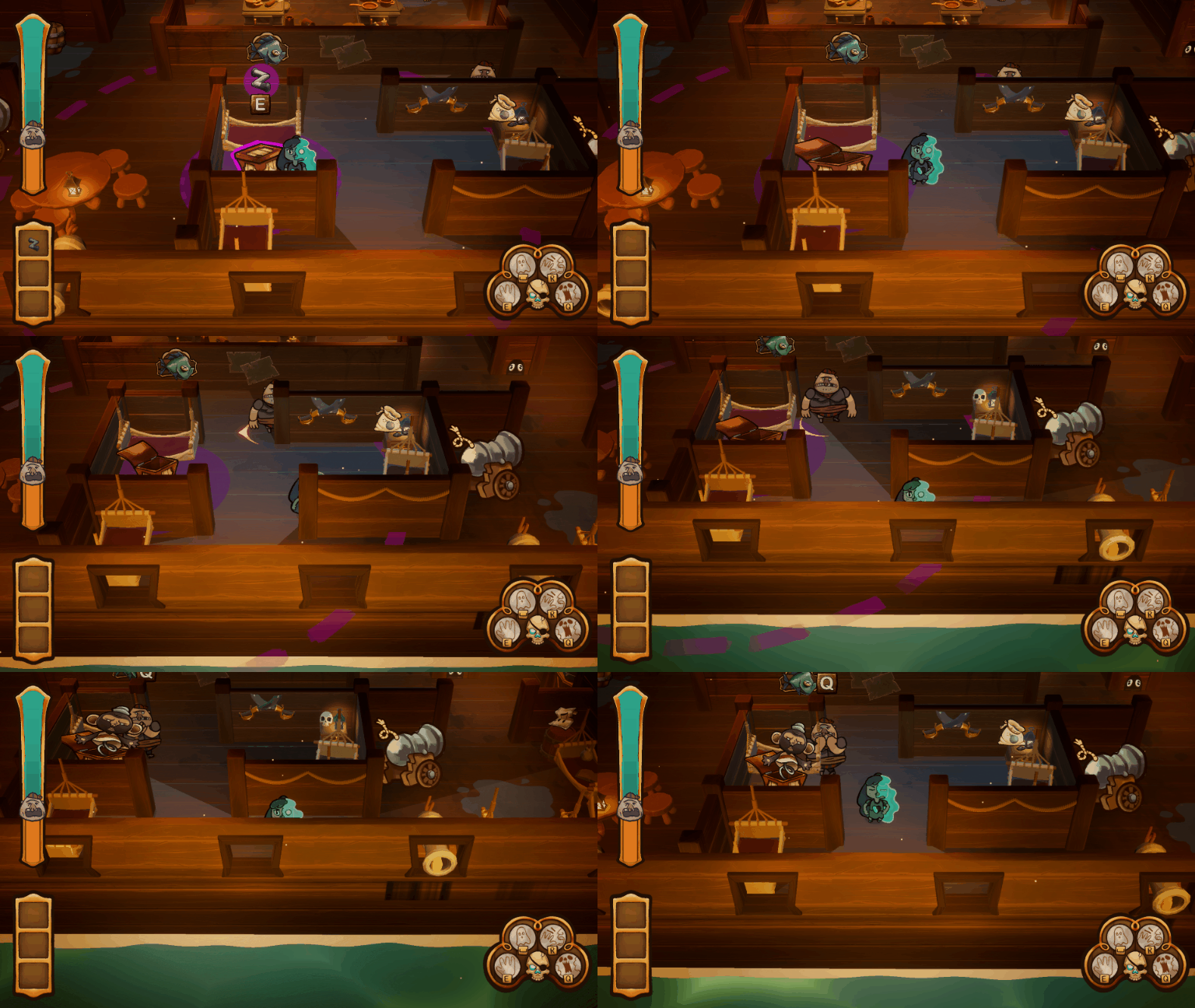
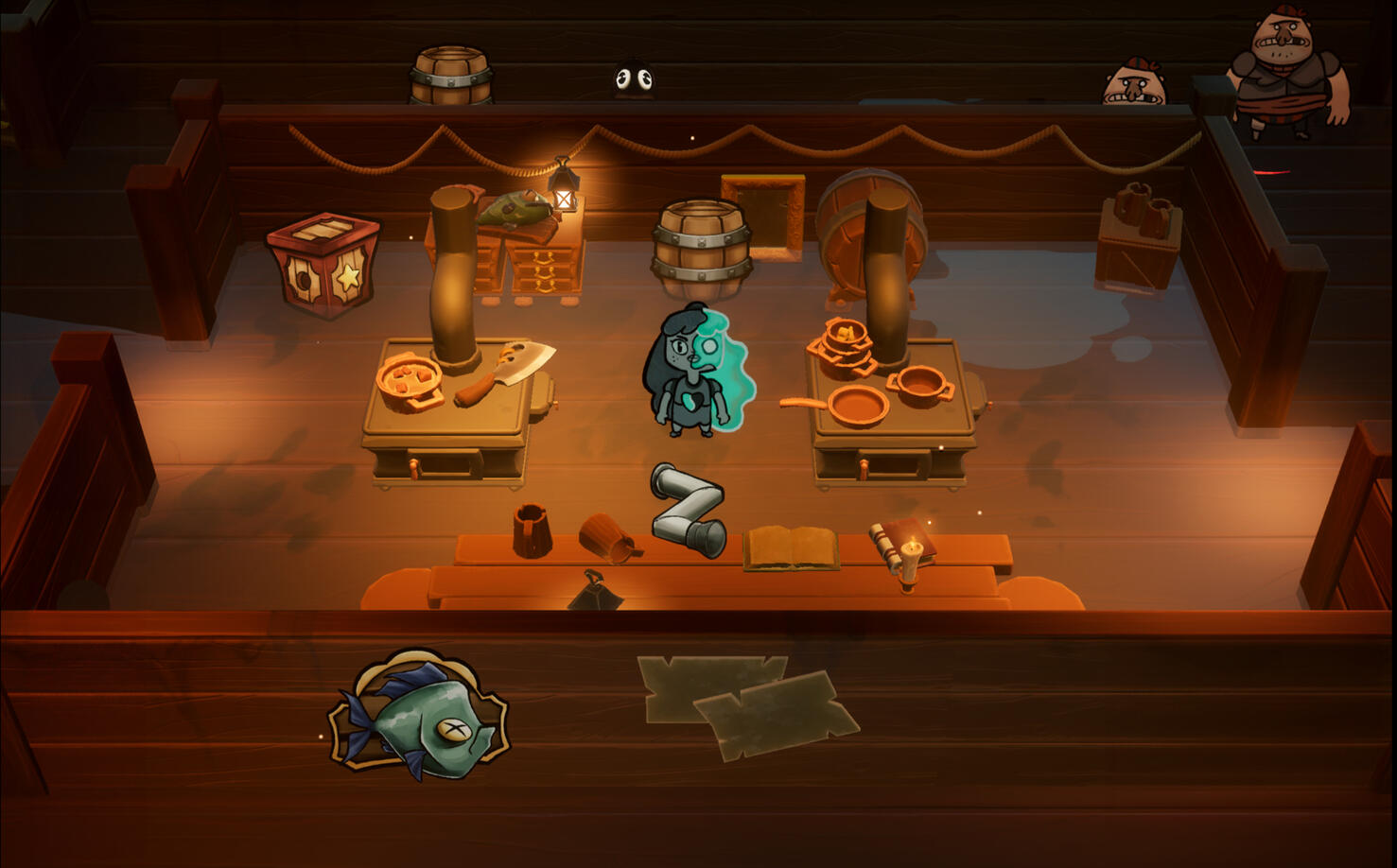
The Fish on the Wall and the Sheet of SongWhen activated, and a pirate walks into it, it will start to sing and stun pirates in a small area.

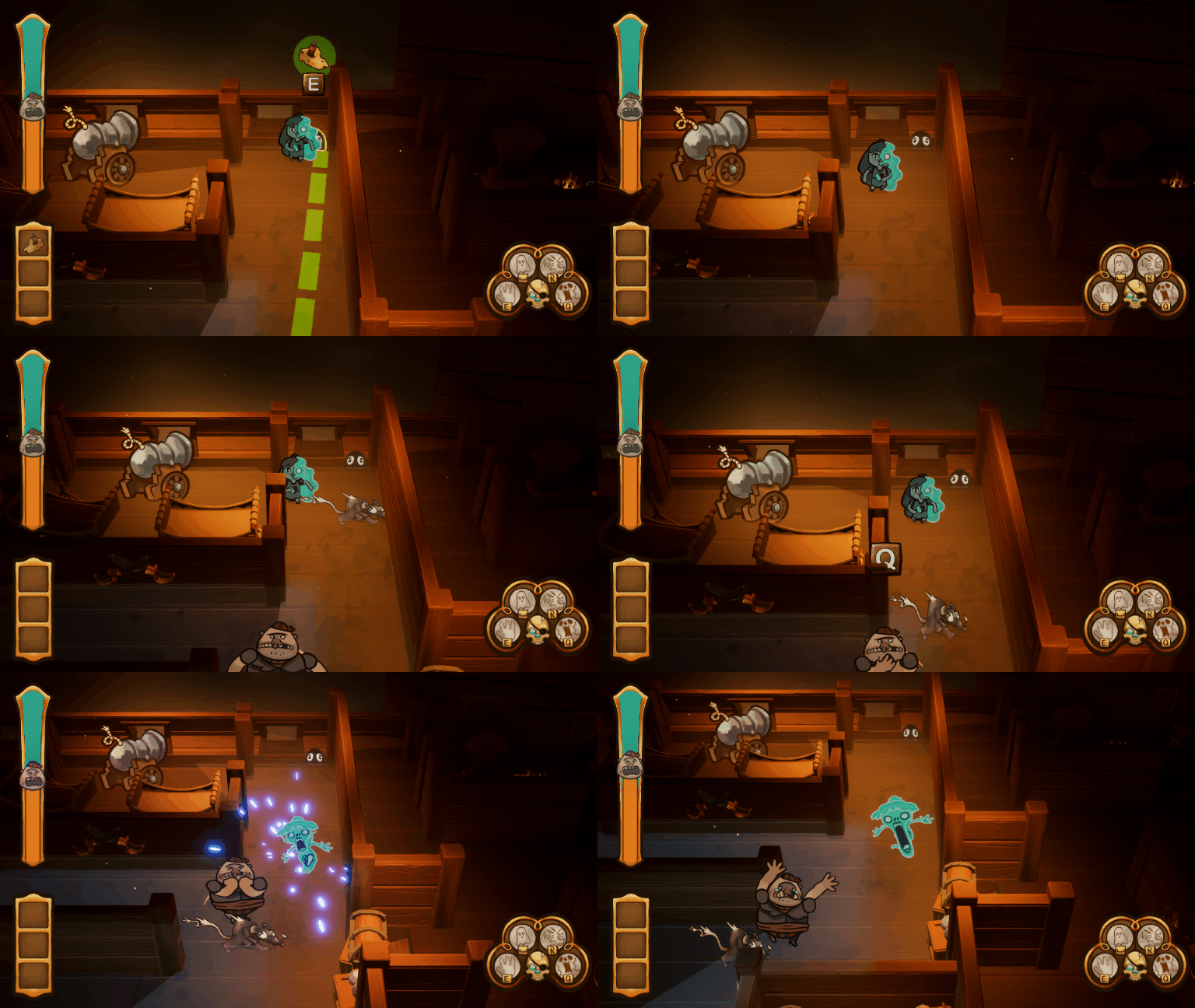
Rathole and Cheese with DynamiteA rat goes to another rathole, stunning every pirate in its path.

Music Box and CrankWhen activated, it will attract pirates within a radius and stun them when one gets near.

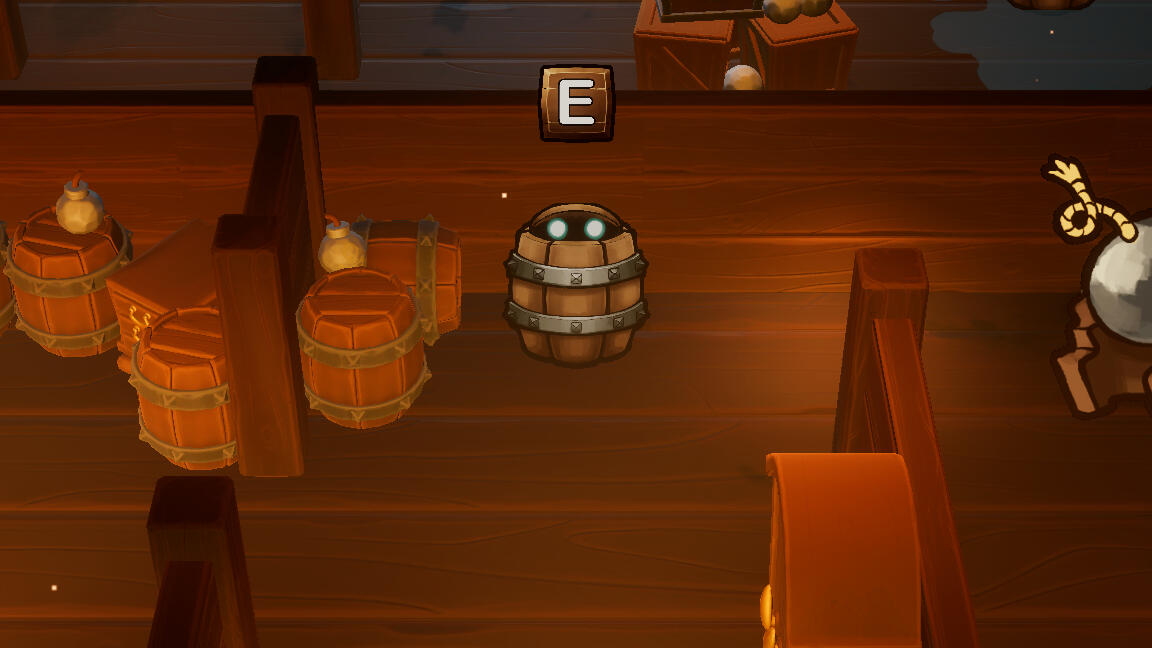
BarrelsThe player can hide in barrels and escape from enemies.

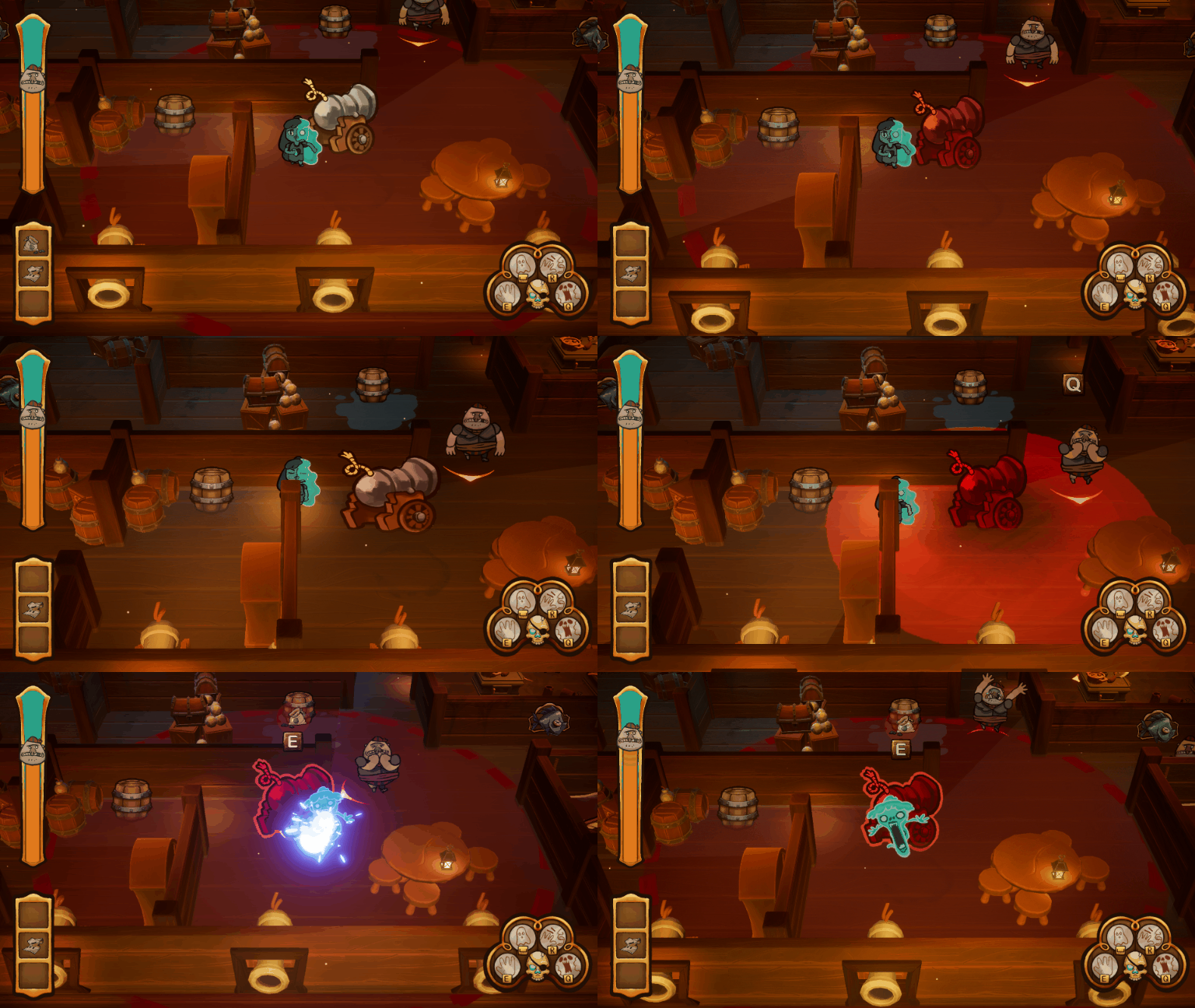
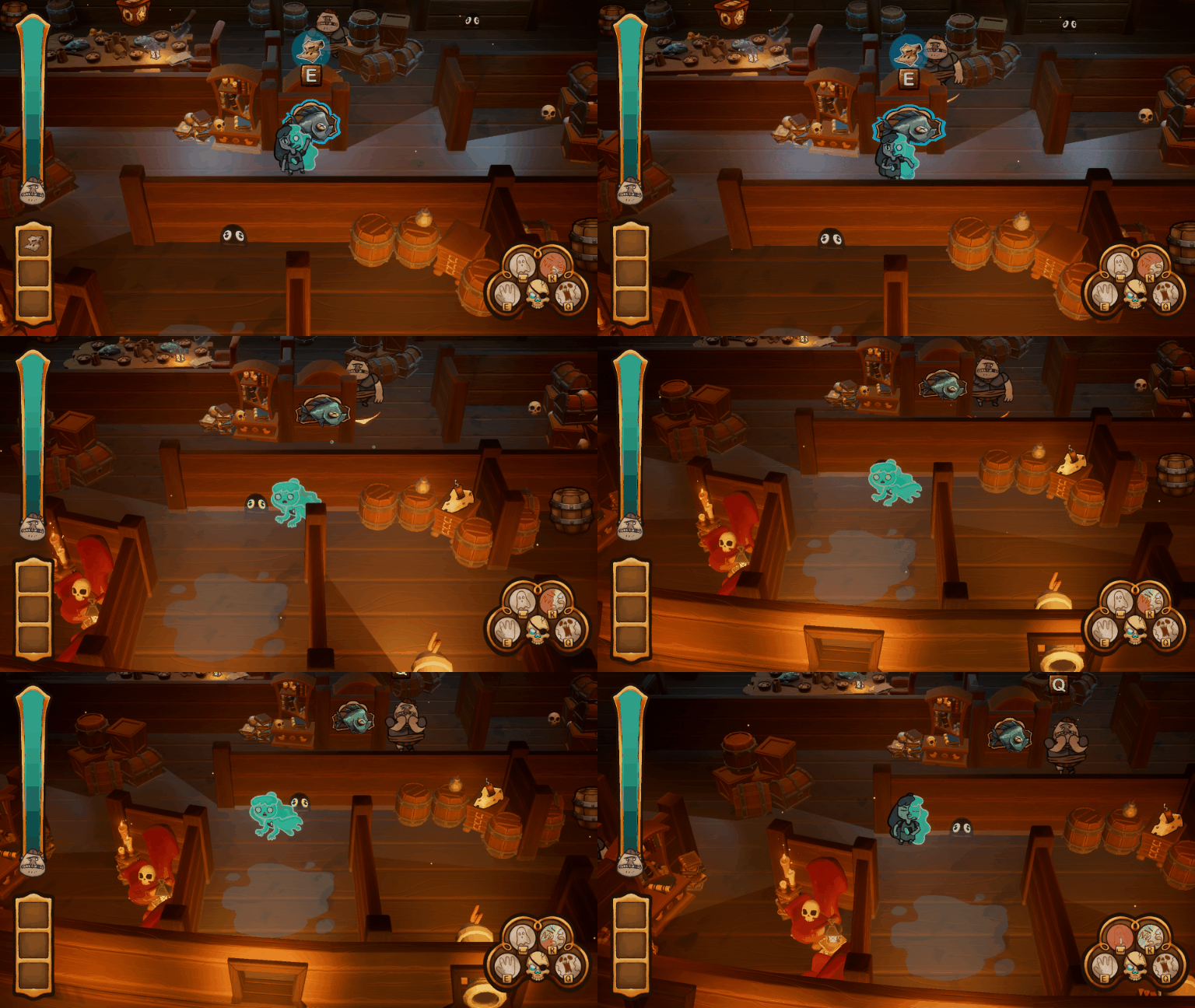
Screenshots
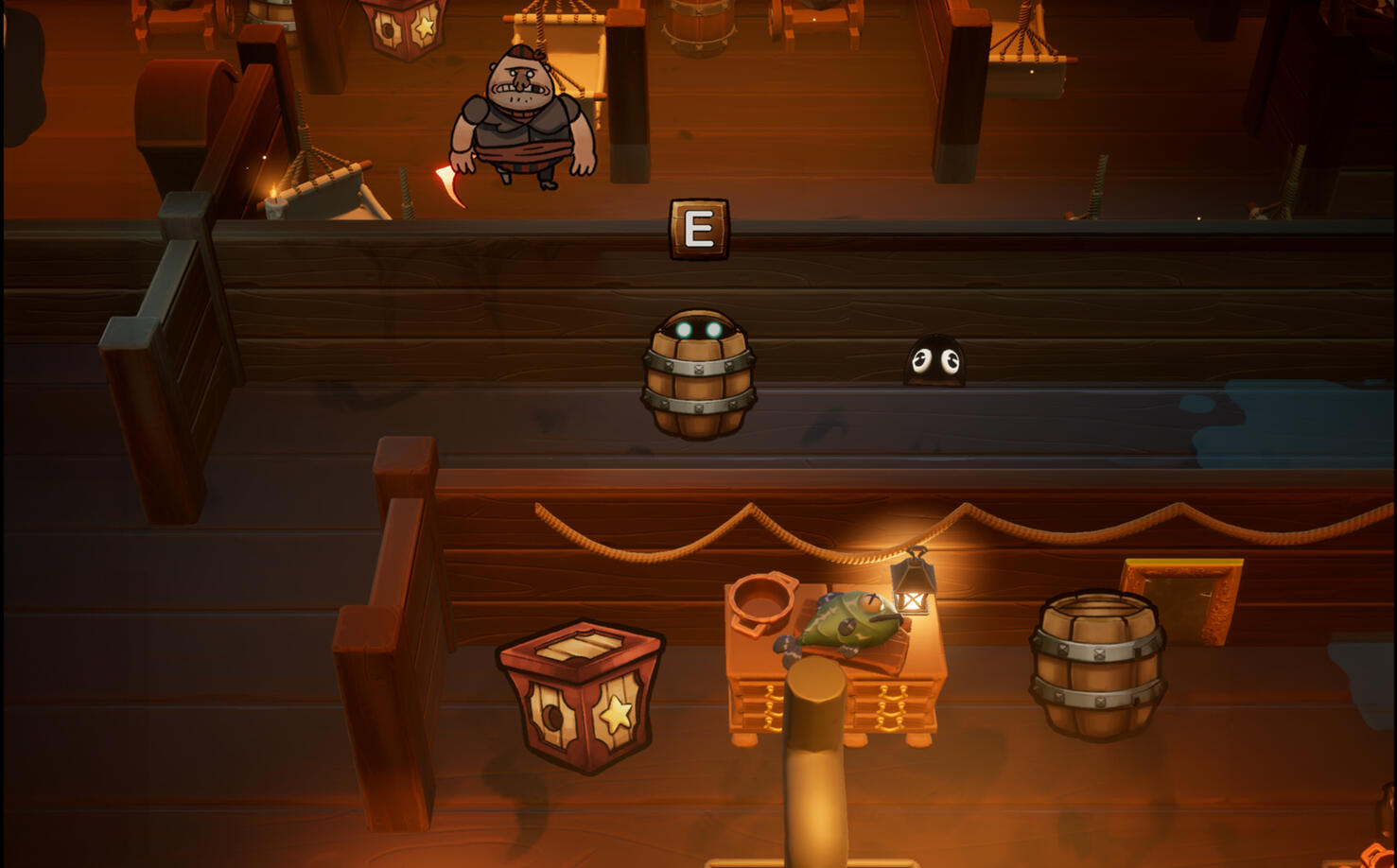
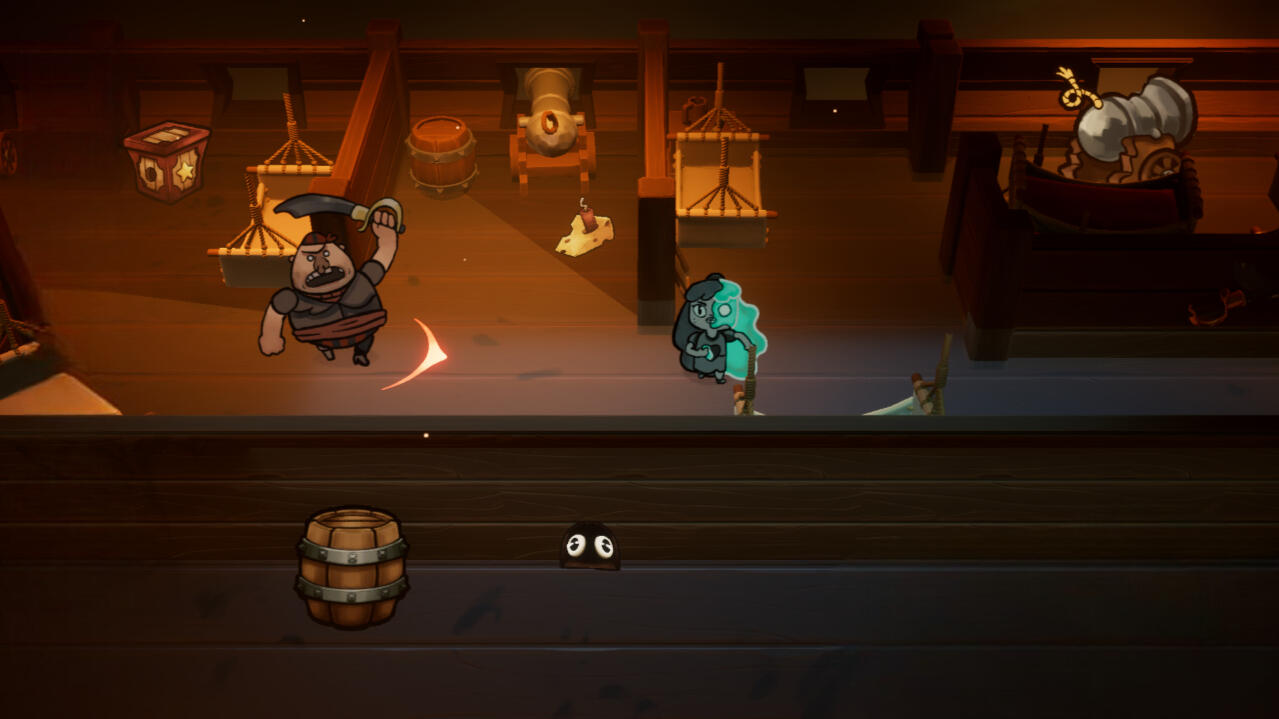
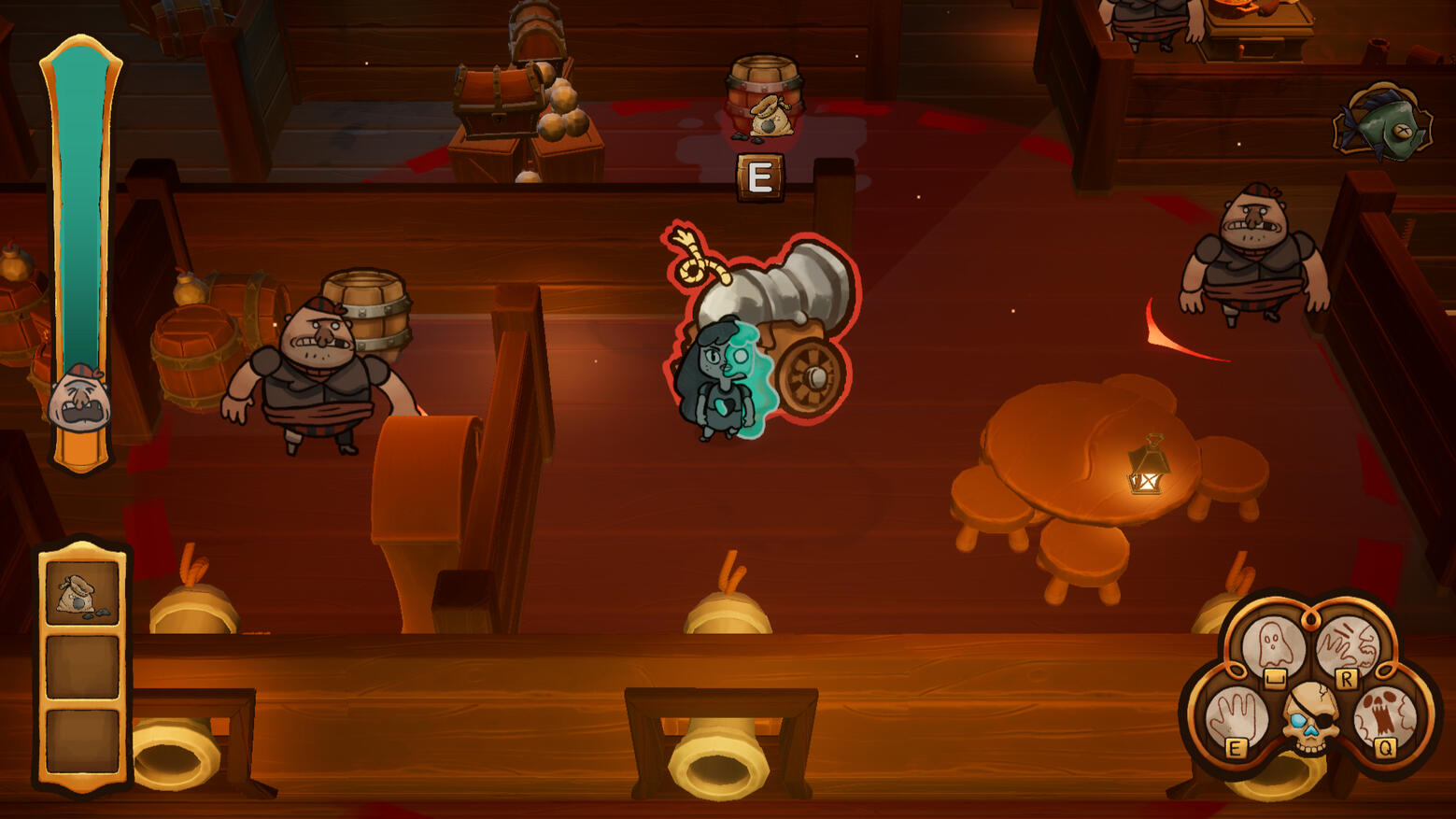
Introduction Levels
The plan
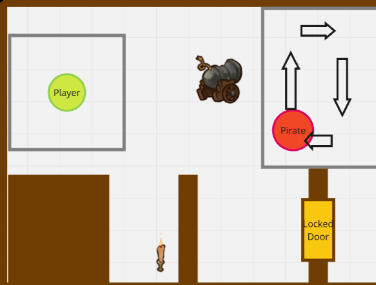
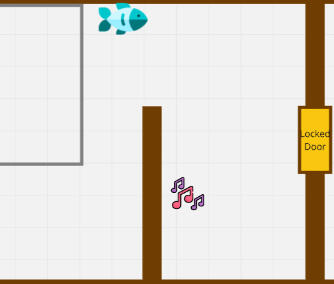
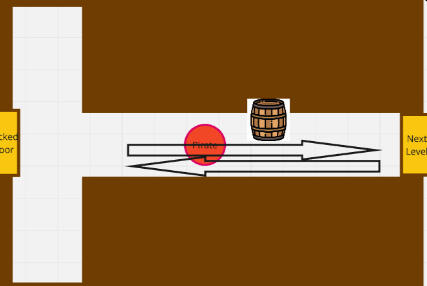
From playtests, it was clear that players need some introduction before jumping into the main game to understand how to play. For this, I planned to create an introduction level where the player is slowly introduced to the mechanics.This was my first plan:
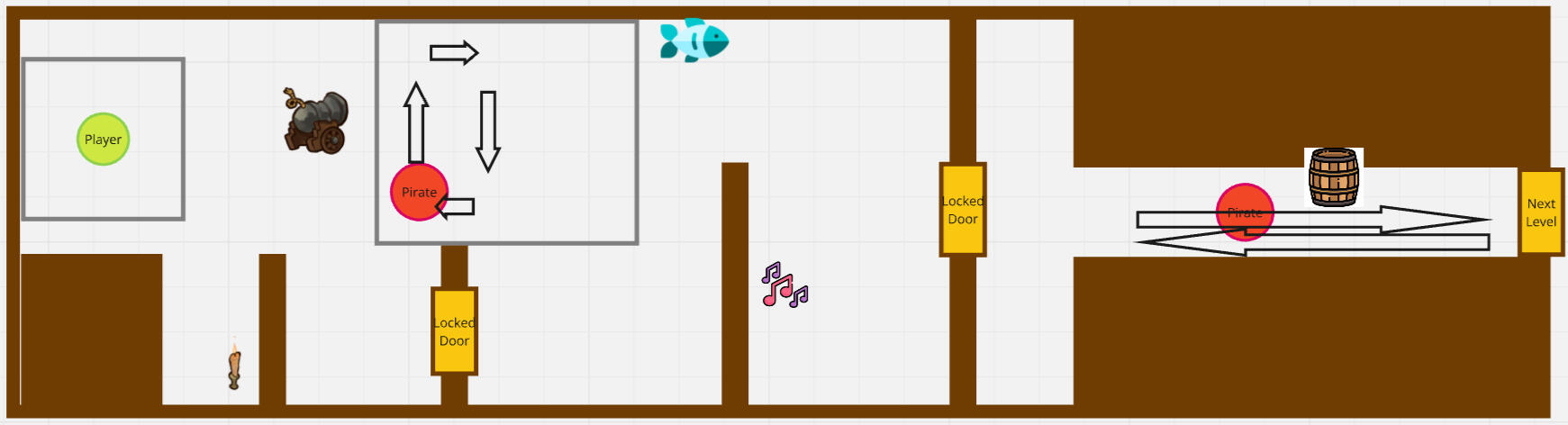

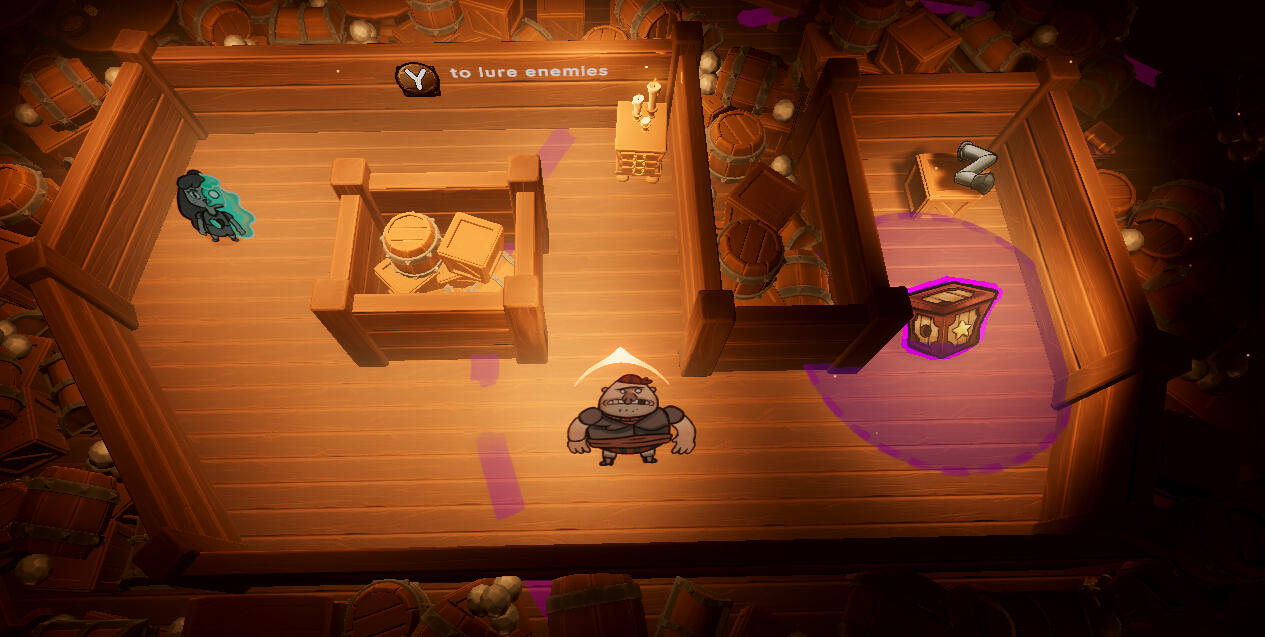
First, I wanted to teach the ability to go through walls by starting the player in a locked room. Then the player would meet a pirate in a cage that cannot harm the player. Here, they would have to learn using the cannon trap, then they could progress.

Here, the players would learn to use the Fish Trap and the Lure ability. After activating the trap, they would have to use the lure ability to get the pirate into the fish's range.

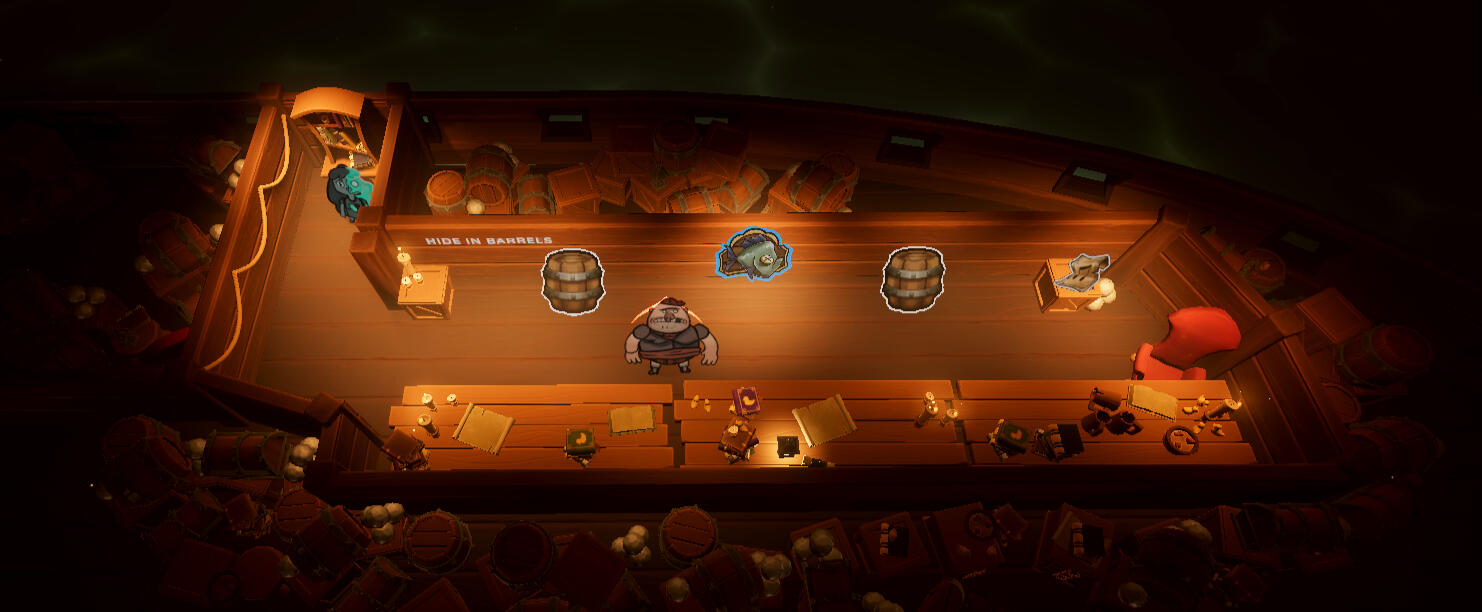
Finally, would learn about hiding in Barrels. Here, a pirate would patrol there and back on a narrow corridor, and the only way past him would be to hide in the barrel in the middle and wait for him to go past you.
The final version
The final version changed a bit. I separated the introductions to multiple levels, so that players do not have to repeat the whole thing if they fail.I had to separate the Cannon Trap and the Fish Trap because there were technical problems with luring the pirate to a place it cannot get to.
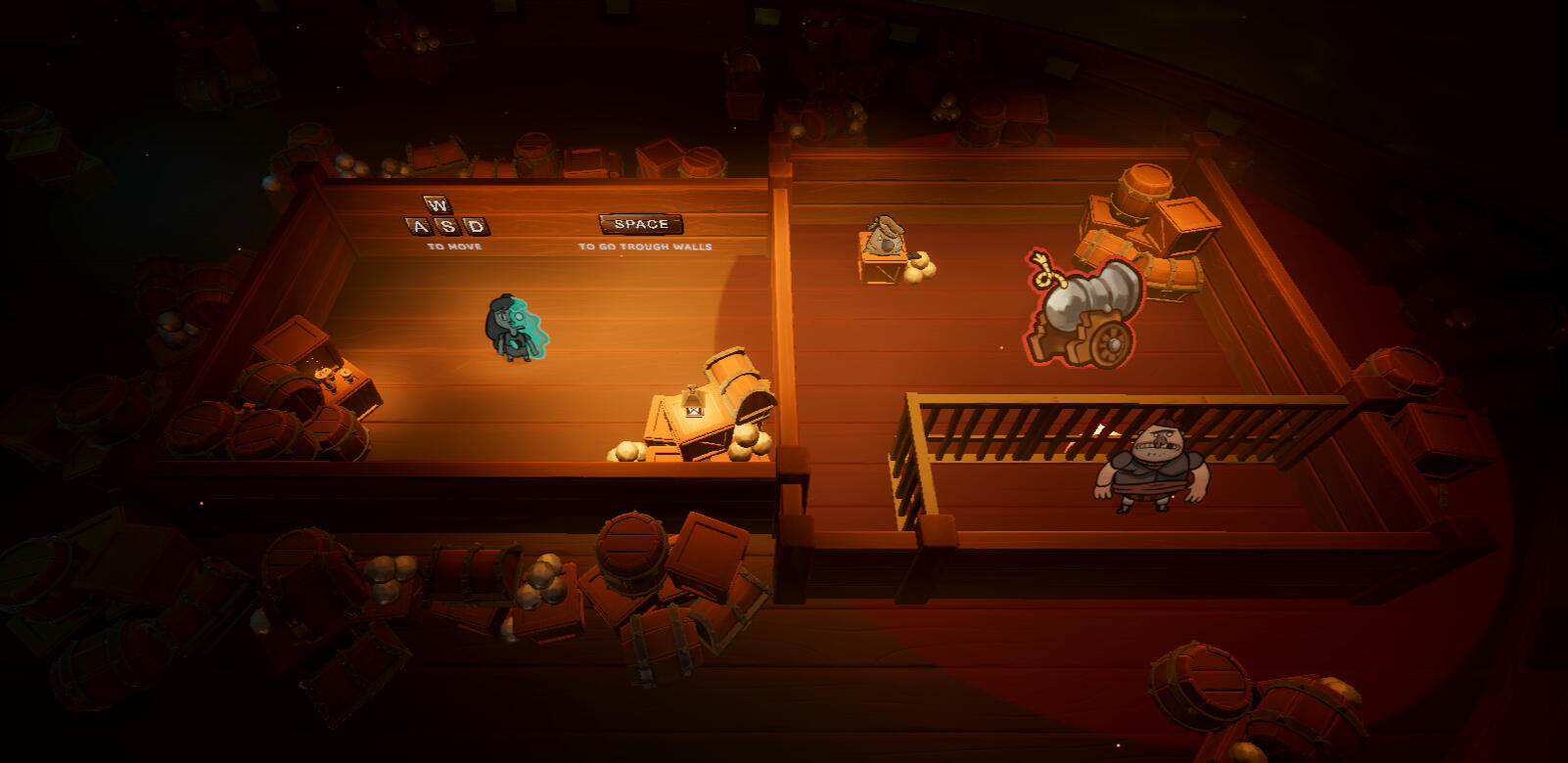
I added the fish trap to the part where the player learns to hide in Barrels.
I added a third introduction where the player learns to lure a pirate away to get to the Music Box trap.
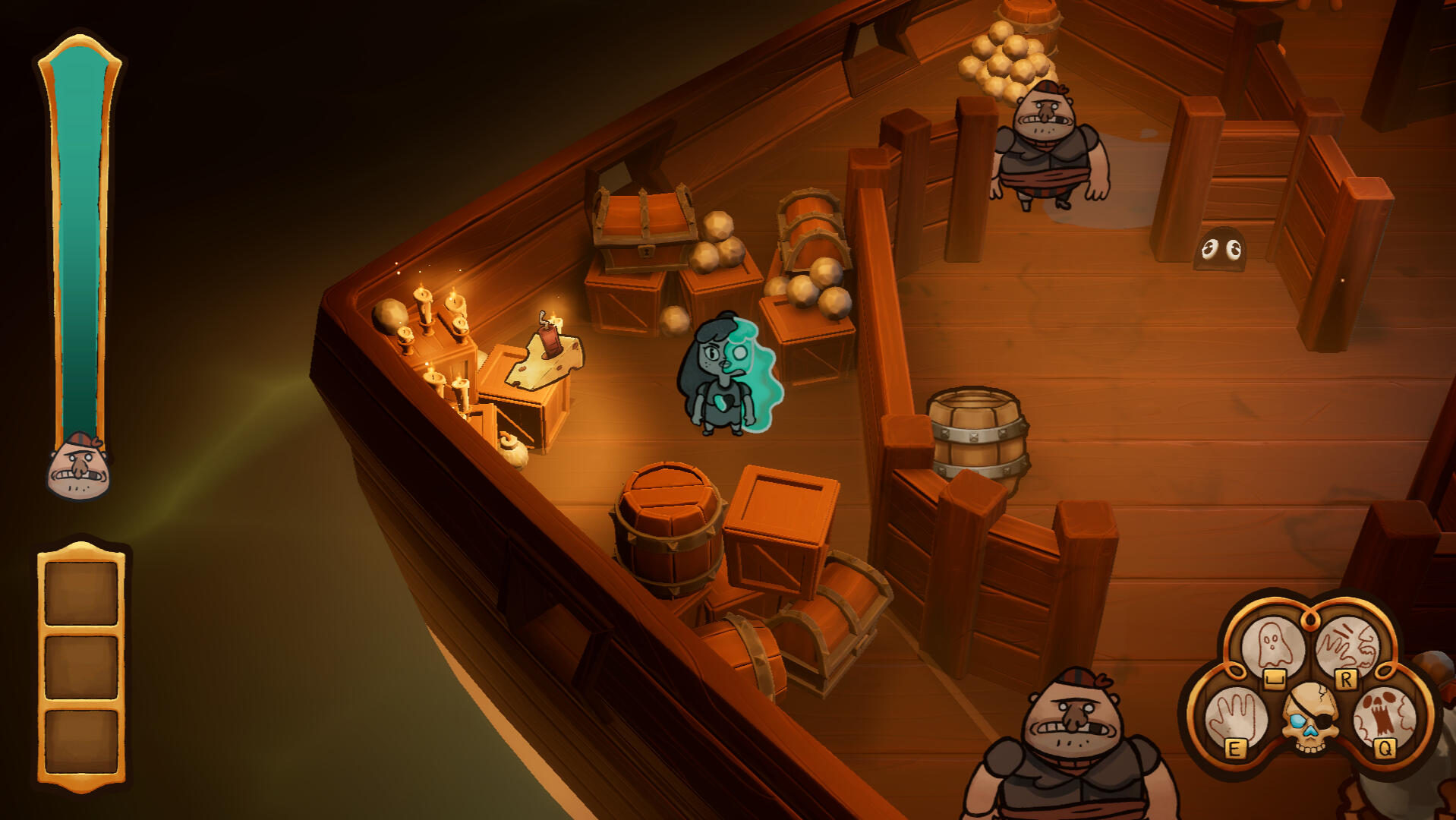
Start of the level
On the first level, the player starts in a safe, confined place where pirates cannot get to. This way, they have a bit more time to think, and it also reminds players that they have the ability to go through walls.The fourth trap involving the Cheese and Rathole was not in the introduction levels, but here it is the first trap the player sees, so they can learn it.
Second Level
Screenshots
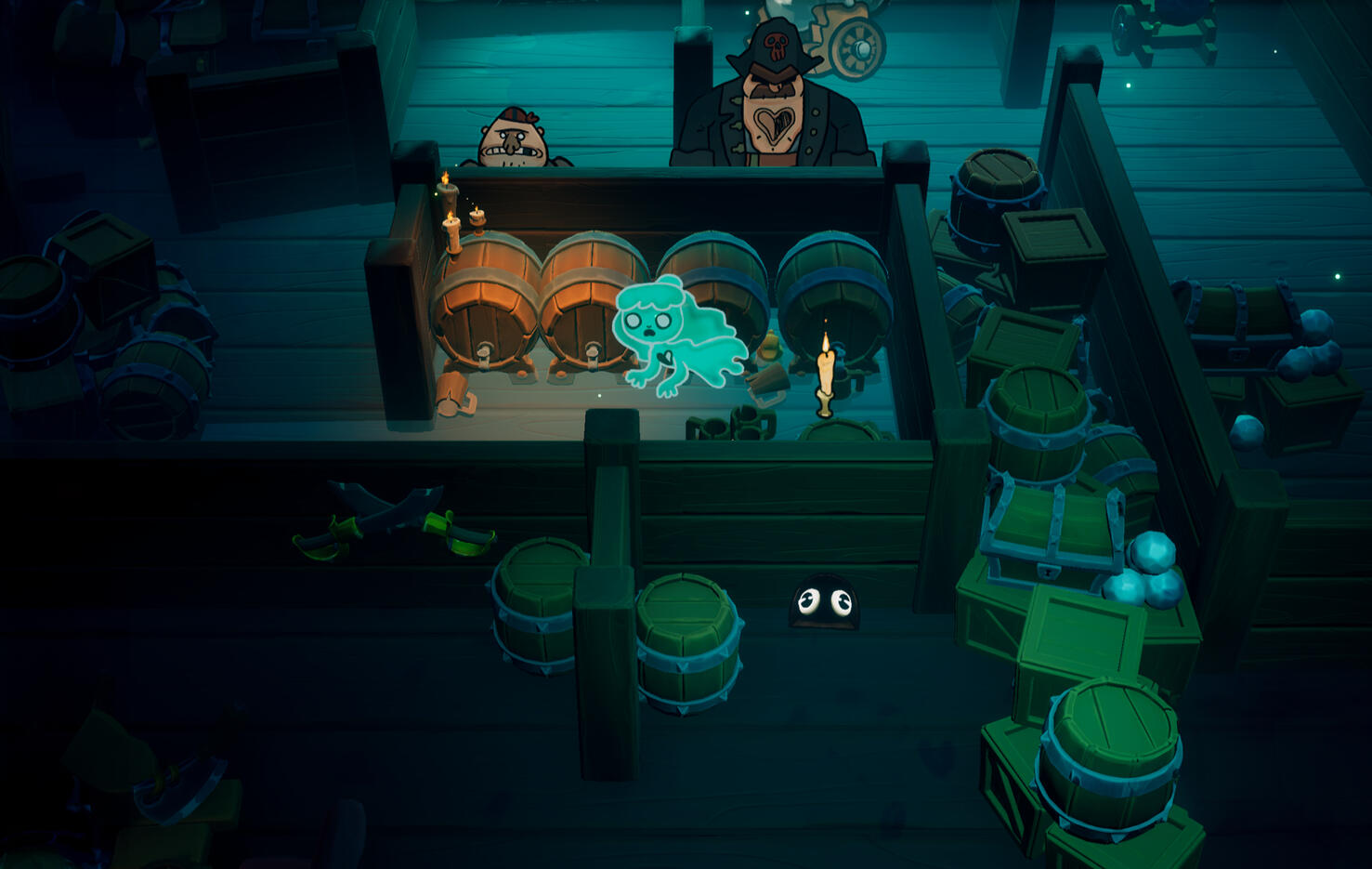
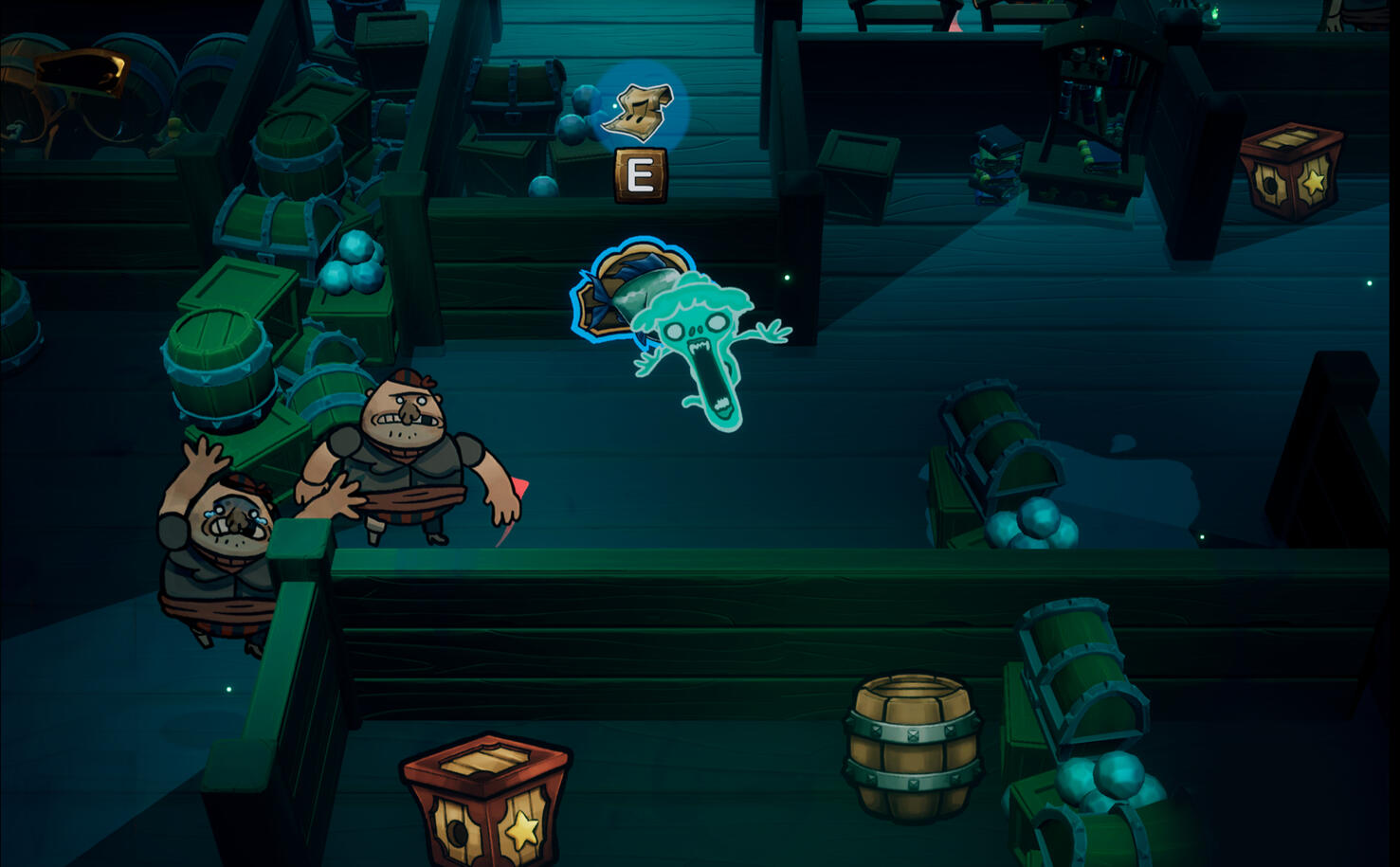
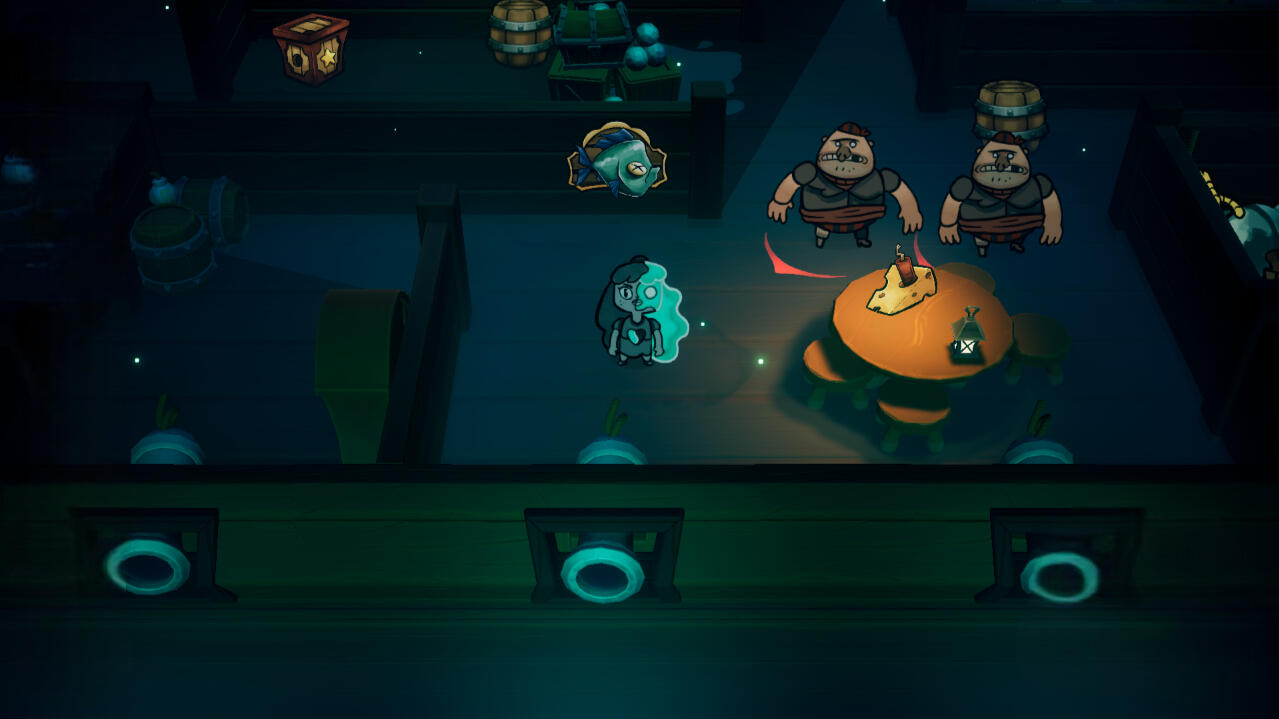
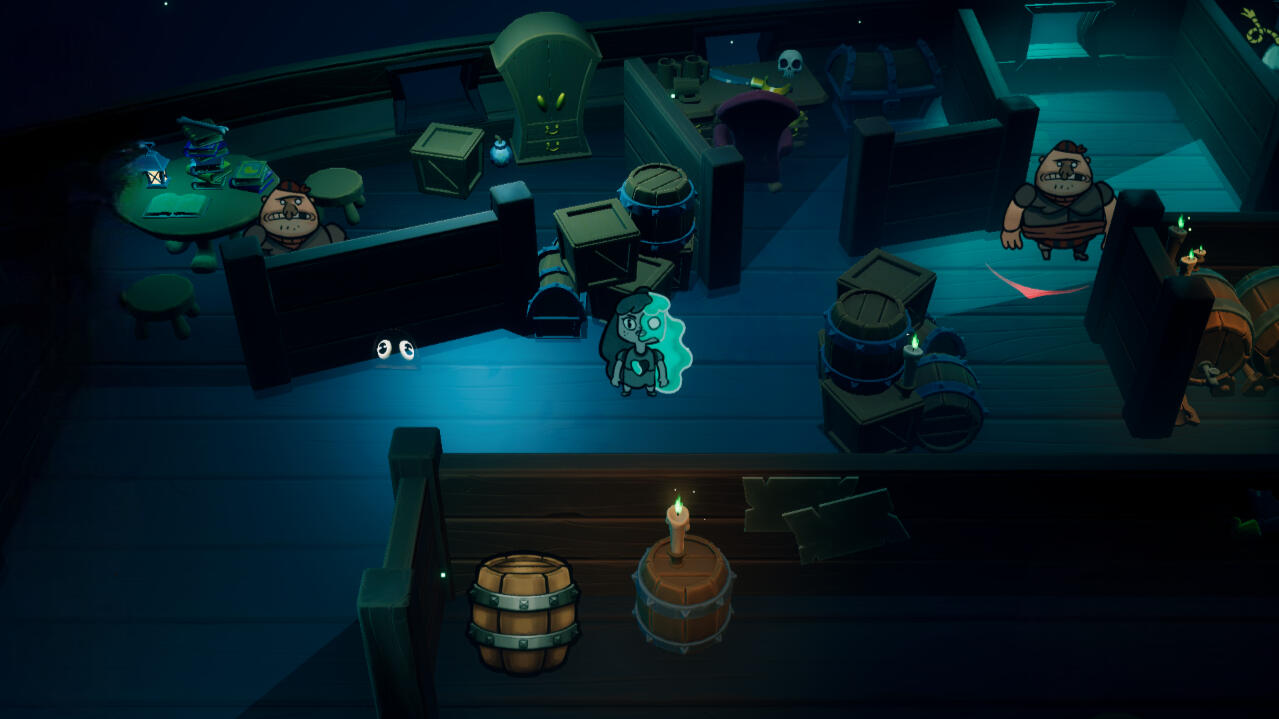
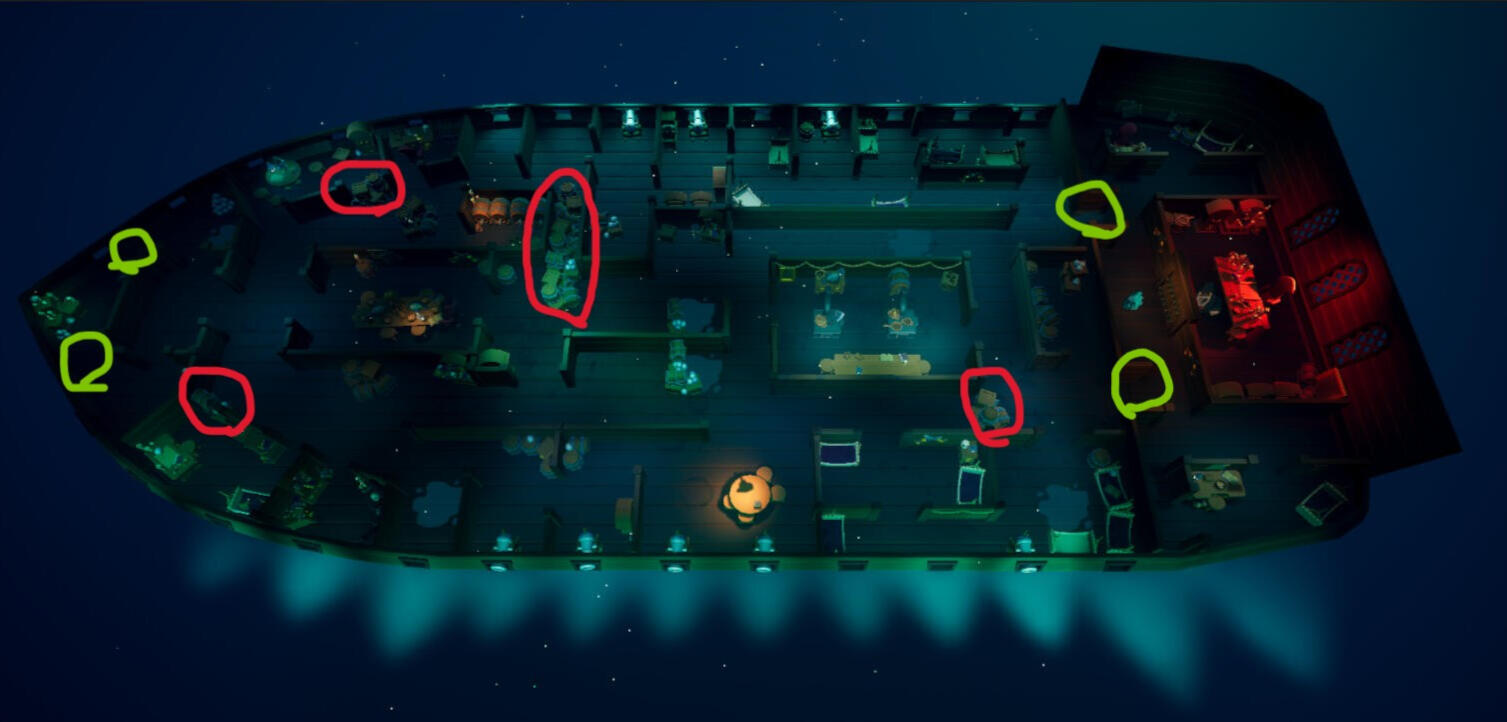
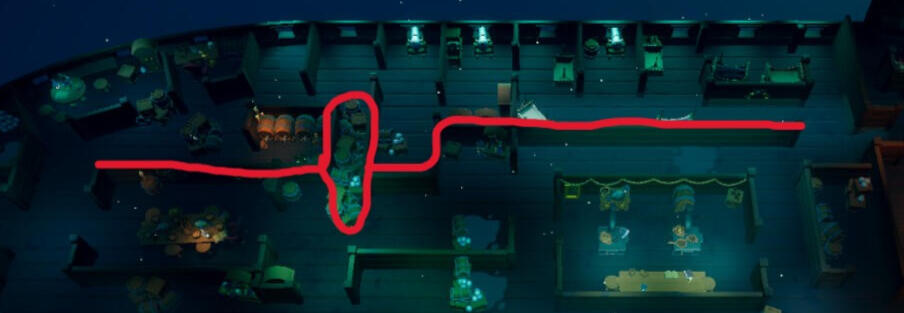
We planned on making two levels with two different moods. I did not have the time to design a completely new level, and the artist had no time to dress up a new level either. I had the idea to use a copy of the first level, but add furniture piles to block off previously open areas or paths, and have the player start at the captain's room, which is a newly added small area. This way, we had a new level layout without the need to redo anything.The added prop piles are circled in red. The removed ones are circled in green.
The Captain
This level introduces the captain enemy. A stalker enemy that the player cannot kill. This means the player has to be much faster with decision-making, since they have less time to plan, scaring the pirates.

This level starts at the cabin, which is a new area, and the player is in immediate danger. The captain is introduced, and the player learns how he works when they try to escape.
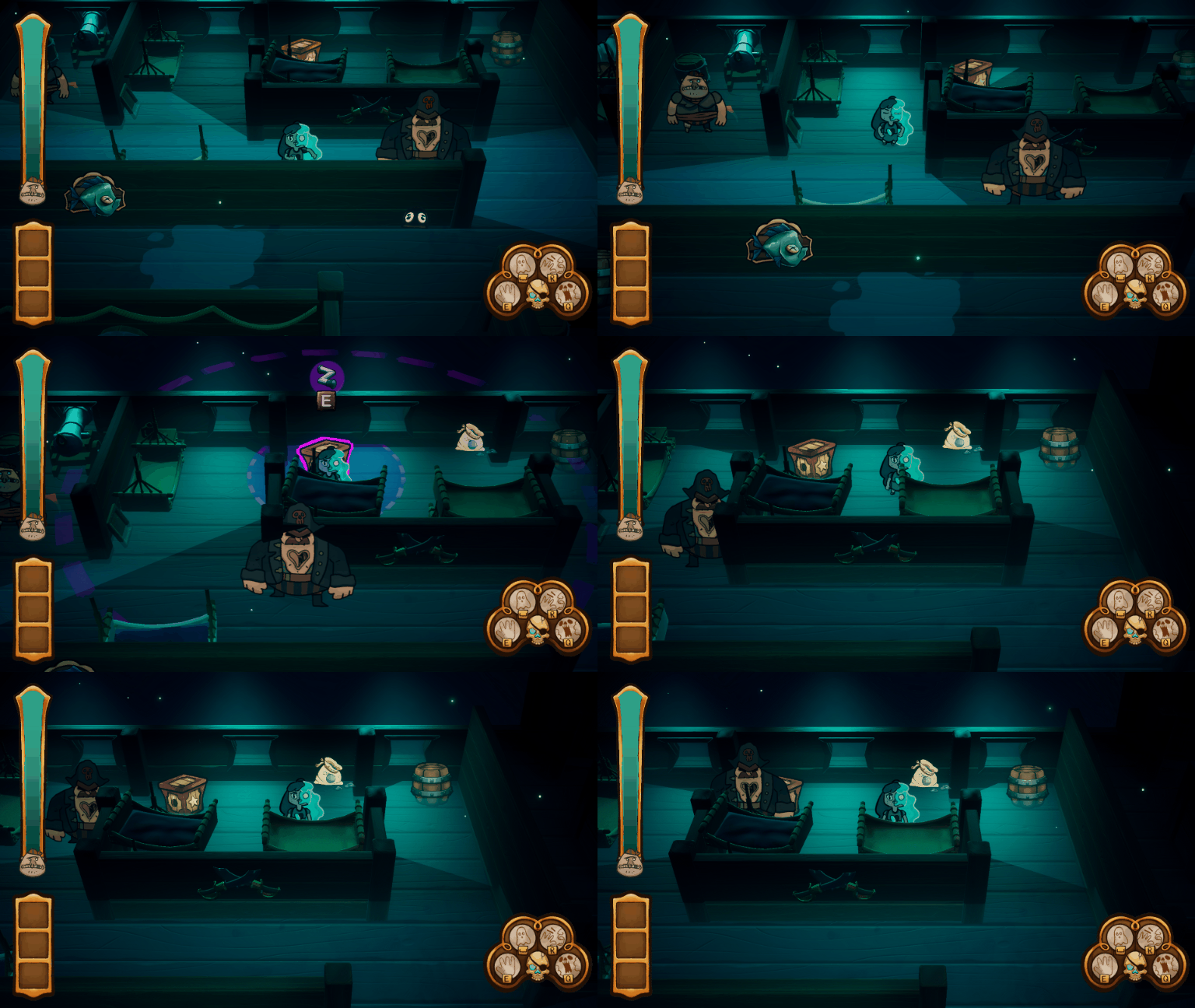
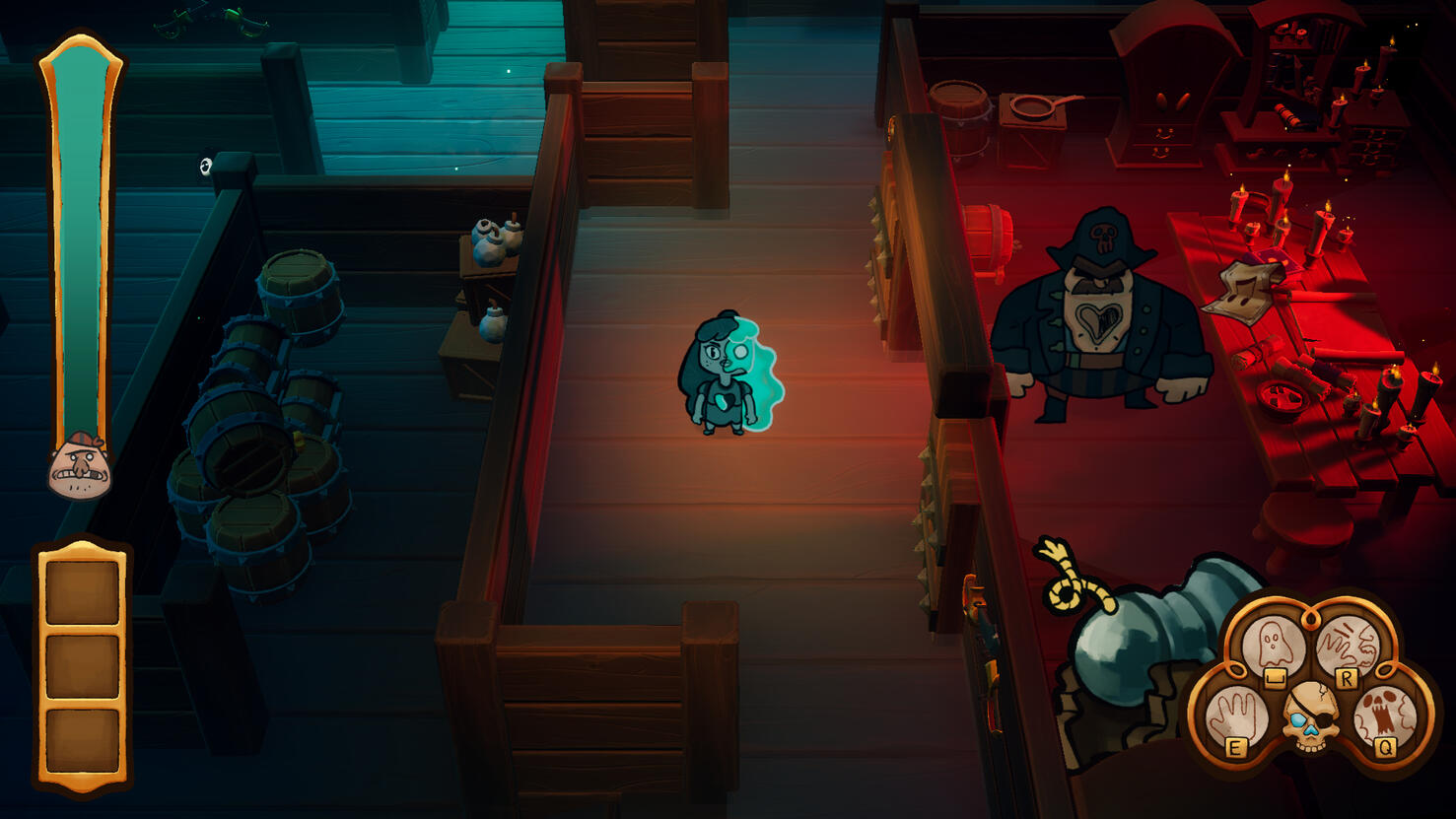
This prop pile is the most significant. It cuts the map in half, making players rely on their ability to go through walls. This, combined with the other new piles and the captain enemy, makes the level feel smaller and more claustrophobic, which is what I wanted with this level.It also helps with the captain. If the captain and the player are on one side, if the player goes through the wall to the other side, it will take the captain a long time to get there, so the player can get rid of him for a while.

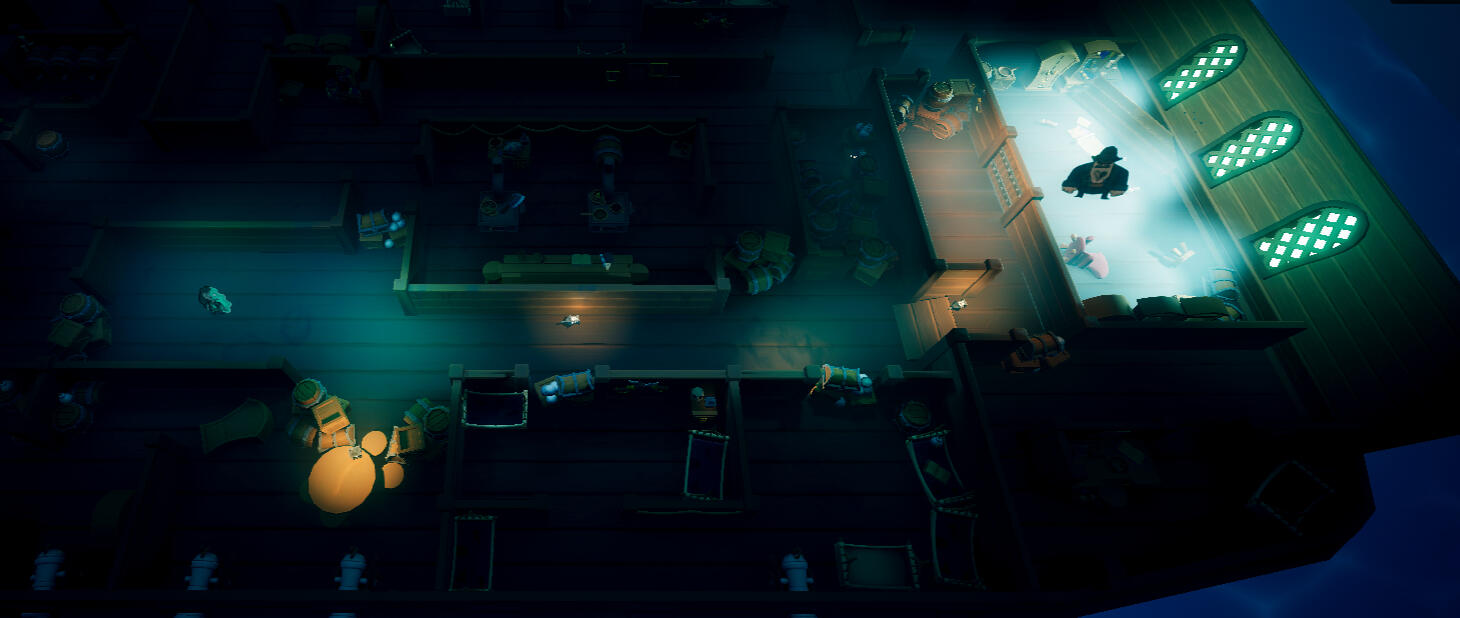
Finally, I designed the ending sequence. After completing the previous levels, the player is rewarded with a quiet linear path where they just walk up to the shivering captain and scare him.
Spoken Tower
I worked as a Unity developer on this project during an internship at Say It Labs in Belgium. It is a rogue-like game designed to help children with speech disorders.It is still not a finished game, but I was allowed to show some parts and share my details about my work on the project.
My responsibilities on the project
Game Design
I worked on balancing the game, and I contributed to meetings discussing game mechanics. I also created rooms for the game. Here are a few examples:
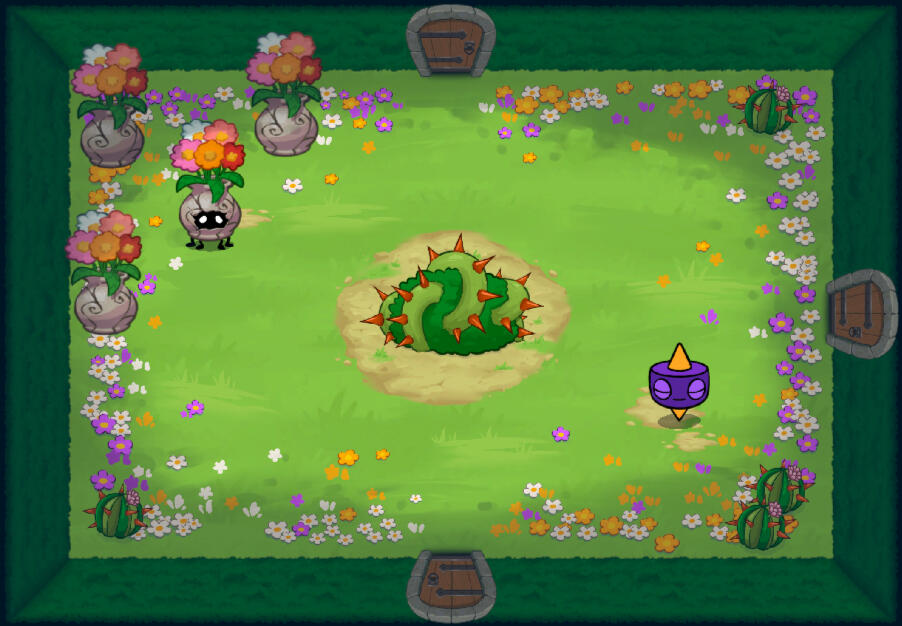
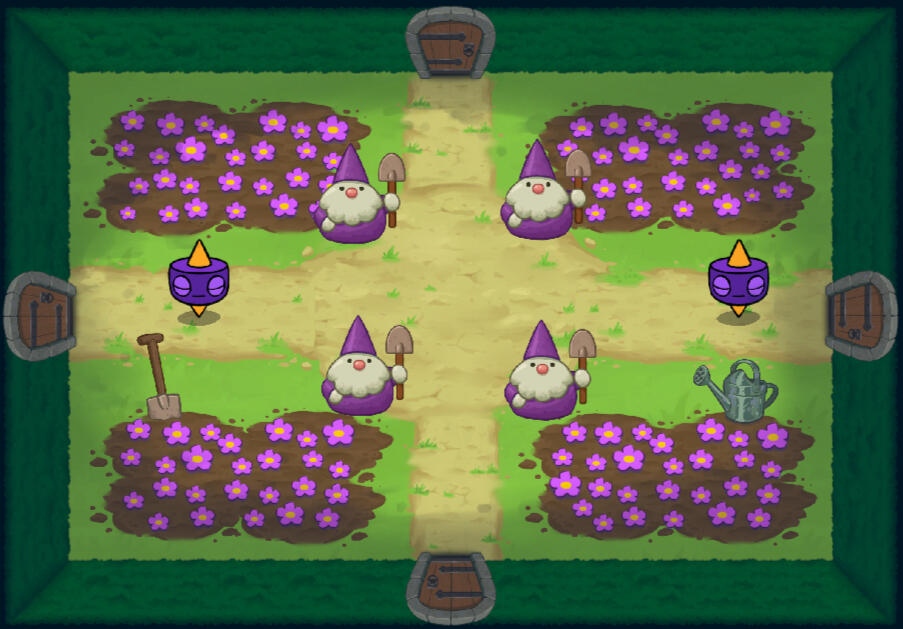
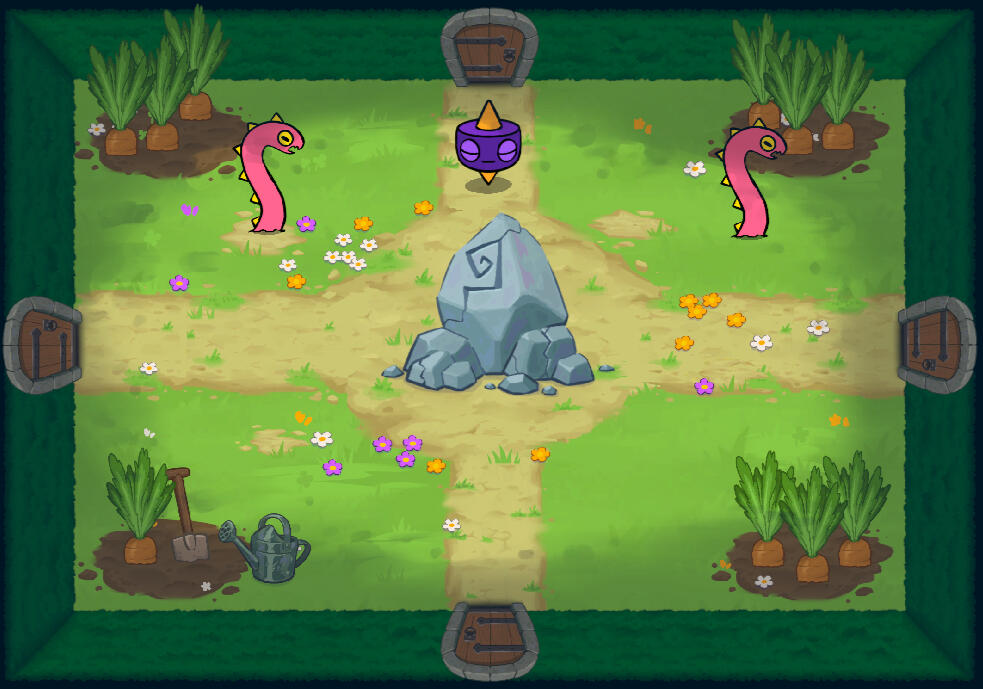
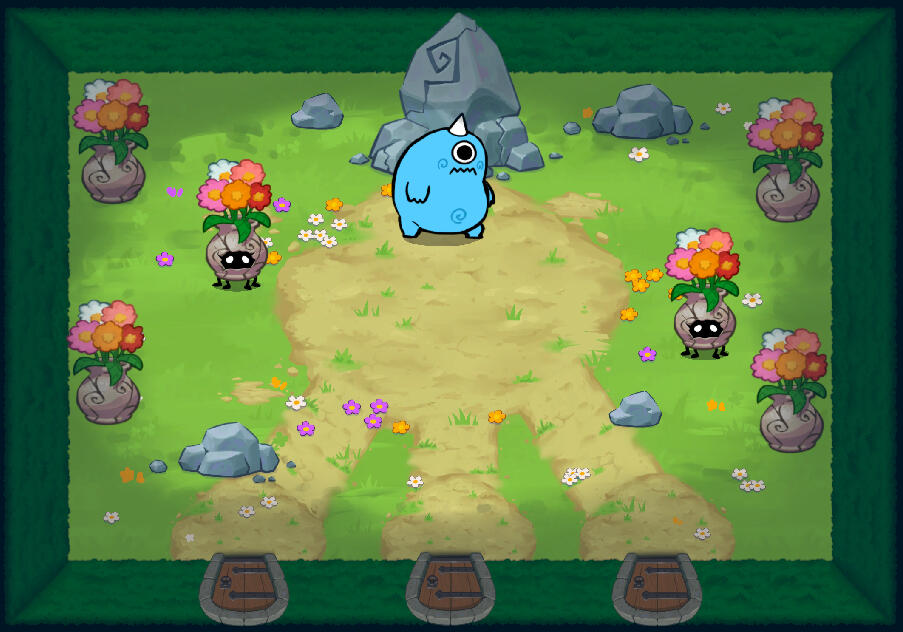
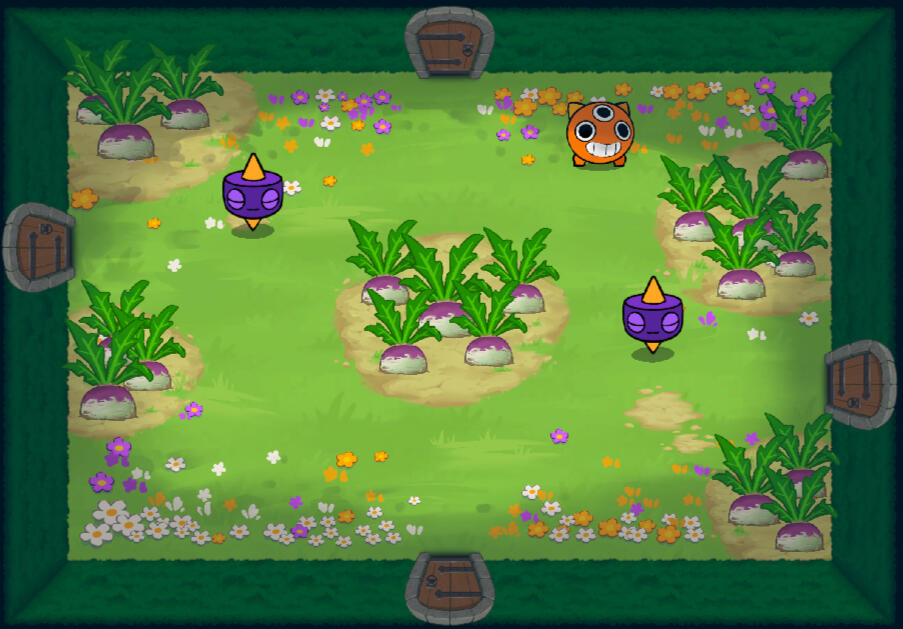
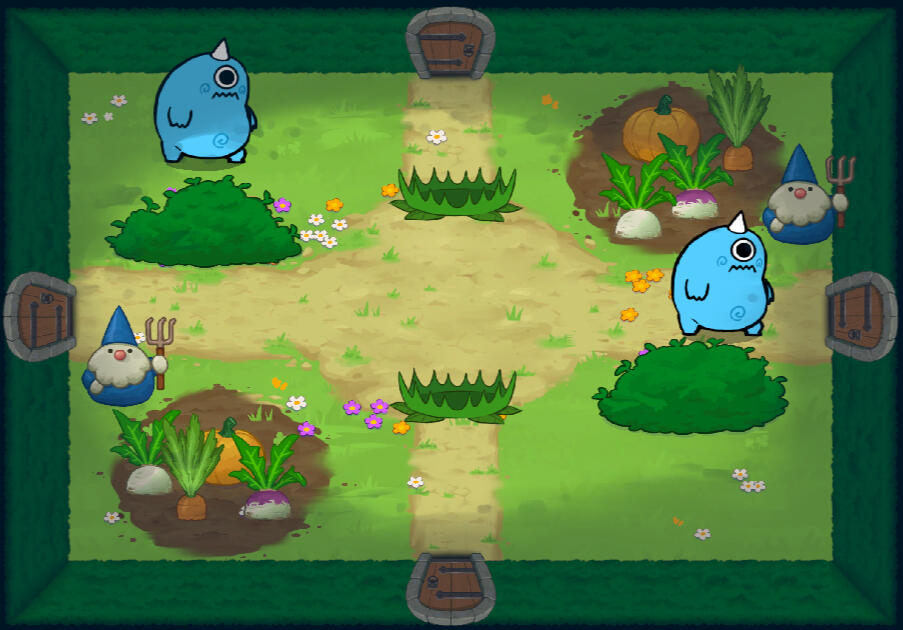
When creating rooms, I was always trying to make it visually interesting and introduce new variations of enemy encounters.
Programming
I worked on many tasks such as:
Bug fixing
Implementing art assets
Implemented player (animations, sounds, VFX) feedback
Creating enemy behaviours using a behaviour tree
Created UI functionalities
Worked on many small systems
Next to the smaller tasks, I had three major assignments that involved refactoring or creating core systems for the game during my internship.
Spell System or Active Item System
This was a mechanic similar to how active items work in Enter the Gungeon or Binding of Isaac. Players can pick up power-ups as room rewards, and this system was responsible for how spells worked. Other power-ups had an immediate effect, but spells were something the player stored and could use later, or pick up a new spell and switch to it.
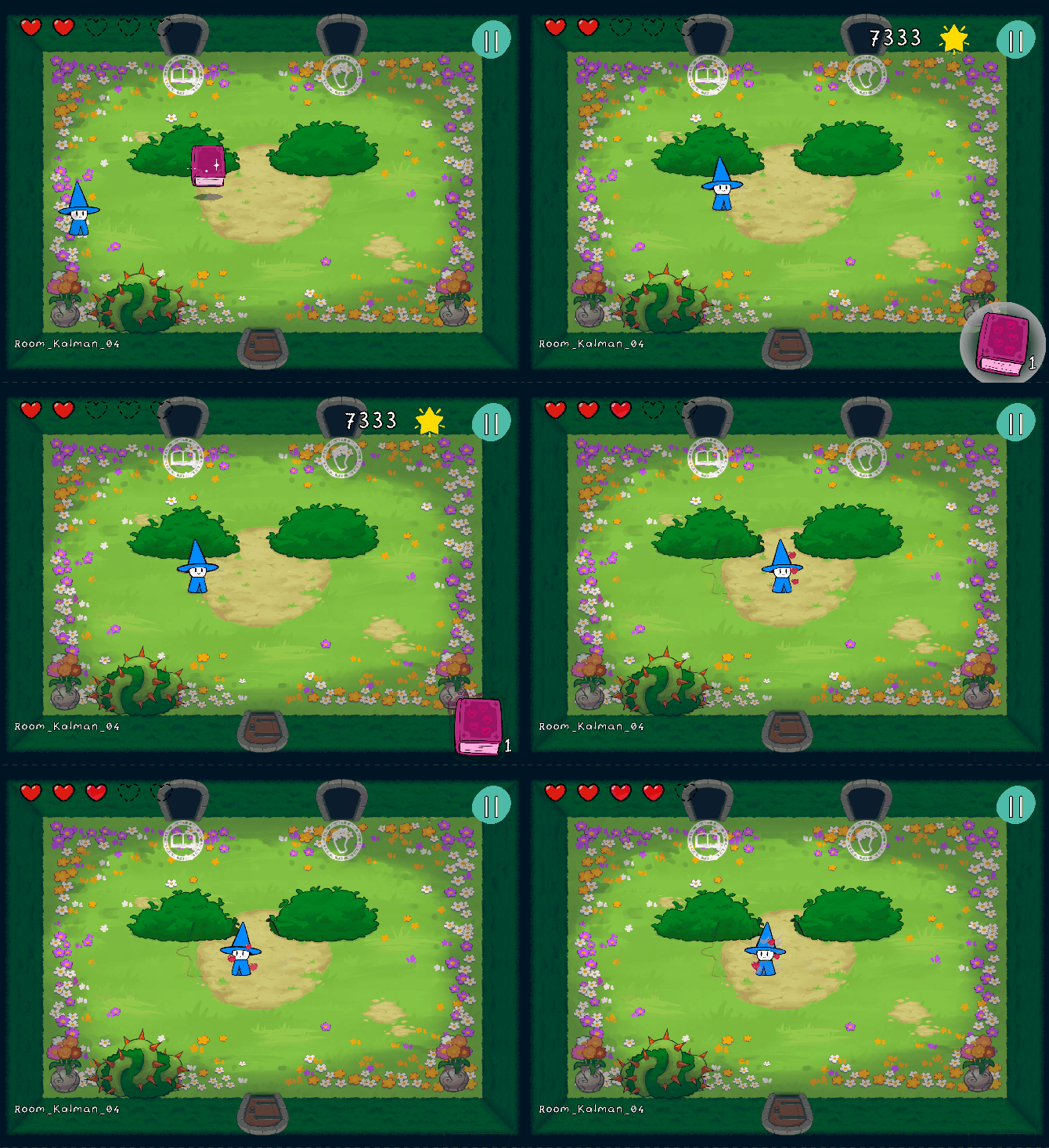
I created the Spell Manager, which is responsible for holding and removing spells, calling the spell's logic, and informing the Spell UI.The UI button was responsible for the visuals of the player holding a spell and calling the manager when the button was pressed.I created the spell power-up and all the base spell scriptable obejct to keep track of the spell's data.This feature was cut from the game, so I can show the code I wrote here:

Saving System
This was the largest system I worked on during the project. I created a class that stored all the information and saved that class as a JSON file.The actual data saving part was very simple, but the difficulty of the task came from getting all the needed data and using the loaded data. The room rewards and the rooms were randomly selected from a folder, so I had to make changes to the system so that specific rooms and rewards could be getable.I also had to create an alternative way of loading the game so that it is loaded based on the saved data and not the default data.
Room rewards and Special rooms
This was the system that decided what type of rewards should be offered from the doors that led to the next rooms, and if a special room could spawn. I designed all these systems in a way that allows new rewards and special rooms to be easily added by simply placing a new game object in the corresponding folder.